If you’ve just started researching sumps — the secondary tank that sits below or beside your main display, where your filter media, skimmer, and return pump live — you’ve probably hit the overflow box question. An overflow box is the device that moves water from your display tank down into that sump. Most reef-ready tanks have an overflow built into the glass. But if yours doesn’t, a hang-on-back (HOB) overflow box is the retrofit solution: one chamber hangs inside the tank, one hangs outside, and a siphon tube — a U-shaped pipe that uses suction — bridges them over the rim. When it works, it’s elegant. When it fails, your sump drains dry and your return pump burns out, or worse, the siphon breaks mid-session and your display overflows onto the floor. This article is about making sure neither of those things happens to you.
What follows is a decision-focused breakdown of HOB overflow box types organized by application tier, how to size them correctly for tanks from 20 to 100 gallons, and the three failure modes that account for the overwhelming majority of bad buyer experiences: wrong GPH rating, gasket and seal leaks, and siphon breaks. Tuning tips and a Herbie drain explainer round out the guide for anyone ready to go further.
The GPH Sizing Problem (And Why Everyone Gets It Wrong)
GPH stands for gallons per hour — the volume of water an overflow box can reliably move from your display tank into your sump. This is the number most buyers anchor to, and it’s also the number most buyers misread.
Here’s the pattern that shows up repeatedly in owner reviews: someone buying for a 75-gallon tank grabs a box rated for 600 GPH, thinks that’s plenty, and discovers six months later that their return pump is fighting the overflow or that the box is air-locking under load. The upgrade they needed — a unit rated closer to 1,200–1,500 GPH — was sitting one step up in the product line the whole time.
The calculation isn’t complicated, but it has two parts most guides skip.
Step 1 — Match your return pump’s actual output, not its advertised maximum. A pump rated at 800 GPH at zero head (no vertical lift, no bends) might deliver 500–550 GPH in a real installation with a four-foot return run and two 90-degree elbows. That’s your real number.
Step 2 — Add a 20–30% buffer for future livestock density, a refugium light that increases evaporation variability, or a second return pump if you’re planning redundancy. As documented in Reef Builders’ article “Understanding Drain Line Noise and Herbie Method Configurations,” undersized overflows are a leading cause of return-pump cavitation and sump flooding in DIY sump builds.
Quick sizing reference:
| Tank Size | Minimum Overflow GPH | Recommended HOB GPH |
|---|---|---|
| 20–30 gal | 300 | 500–600 |
| 40–55 gal | 500 | 700–900 |
| 75 gal | 700 | 1,000–1,200 |
| 90–100 gal | 900 | 1,400–1,600 |
The lesson isn’t that a smaller box is a bad product. It’s that the application was wrong from the start — and that mistake is almost always cheaper to avoid than to fix after the first fill.
Three Overflow Types by Application Tier
Not all HOB overflow boxes use the same siphon architecture, and the differences matter more than brand name or cosmetics. The three categories below map to the tank sizes and risk tolerances most hobbyists actually encounter.
Small-Tank Single-Chamber Overflows (20–55 Gallons)
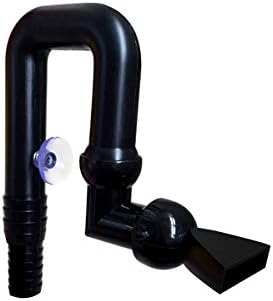
Single-chamber HOB overflows with a simple U-tube siphon are the entry point for most first sump builds on tanks under 55 gallons. They are widely available, easy to prime, and inexpensive enough that replacing one isn’t catastrophic.
The documented vulnerability at this tier is air accumulation at the U-tube apex. As detailed in Reef2Reef’s community documentation on siphon-driven overflows and HOB overflow sizing, dissolved oxygen slowly comes out of solution and collects at the high point of the siphon loop. Budget single-chamber units often omit a powered air-bleed pump, relying instead on a passive venturi. If the venturi clogs — and in reef tanks with salt creep, it will — siphon break becomes a matter of when, not if.
Who this tier is right for: Freshwater planted tanks, fish-only-with-live-rock (FOWLR) systems under 50 gallons, or hobbyists using a modest return pump (under 500 GPH actual output) who plan to upgrade within two years. Install a gate valve on the return line and you can run this tier stably for a long time.
Multipurpose
$11.98
In stock on Amazon
Check price on AmazonMid-Range Dual-Port Overflows (55–90 Gallons)
At the mid tier, the meaningful upgrade is the addition of a second drain port. A dual-port HOB overflow can be configured with an emergency standpipe — the foundation of the Herbie drain method (covered in the FAQ below) — and dramatically reduces siphon-break risk because one drain runs full-gravity rather than depending on suction dynamics alone.
The Eshopps PF-1200 is a well-documented example at this tier. Owner accounts — collected across product review aggregates and discussed in Advanced Aquarist’s article “Overflow Box Selection and Siphon Stability in Reef Systems” — consistently describe the step up from a 600-GPH-rated single-port box to a 1,200-GPH dual-port model as the fix that finally produced stable sump levels on 75-gallon systems. The review record is specific: buyers who started with a 600-rated box for a 75-gallon reef were the cohort most likely to return or replace it within six months.
The Eshopps Eclipse Slim is also well-regarded at this tier for its slim-profile inner box design, which fits tanks with internal bracing. Owner documentation is specific and consistent on one point: the gaskets, particularly in early production batches, are the component to inspect before first fill. At least one documented first-install leak traces directly to incorrect gasket seating rather than a defective part. Dry-fit, inspect, and re-seat before adding water — this applies to any HOB unit at any price.
Who this tier is right for: Reef systems from 55 to 90 gallons, any build where livestock value makes a siphon break genuinely costly, and anyone planning Herbie drain configuration without drilling.
Seachem
$12.69
In stock on Amazon
Check price on AmazonHigh-Capacity Overflows for Large Displays (90–100+ Gallons)
At 90 gallons and above, the calculation changes. A siphon break or slow leak in a large reef system is not an inconvenience — it is a potential equipment and livestock loss event. Premium-tier HOB overflows at this range offer higher rated GPH (1,400–1,600), heavier-wall chambers, and in many cases dual air-bleed systems running independently so that a single pump failure doesn’t immediately threaten the siphon.
The more important consideration at this tier — covered in TFH Magazine’s “Sump Basics for the Advancing Hobbyist” and extensively documented in Reef2Reef’s Herbie drain community threads — is whether a HOB overflow is the right tool at all. On a 90–100 gallon display, the incremental cost of purchasing a pre-drilled tank or having an aquarium shop drill an existing one is small compared to the cost of a saltwater flood or a burned return pump. A true Herbie drain on a drilled tank eliminates siphon dependence entirely — the physics are gravity, not suction.
If a HOB is the only option at this tank size, the decision rule is straightforward: buy the highest GPH-rated dual-port box your sump plumbing can accommodate, run a gate valve on the return, and plan quarterly inspection of the air-bleed system as a non-negotiable maintenance item.
Who this tier is right for: Established reef keepers with 90–100+ gallon displays who cannot or choose not to drill, or who want maximum HOB performance while planning a future drilled-tank upgrade.

ESHOPPS
$179.99
In stock on Amazon
Check price on AmazonThe Three Real Failure Modes — Named and Explained
Advanced Aquarist’s “Overflow Box Selection and Siphon Stability in Reef Systems” identifies three failure modes that map almost exactly to what appears across product review aggregates. Understanding these before you buy is the difference between a sump that runs quietly for years and one you’re babysitting every weekend.
Failure Mode 1: GPH Mismatch. Covered in the sizing section above, but worth naming as a failure mode rather than just a spec question. GPH mismatch presents as either a display tank that slowly rises (overflow can’t keep up with return pump) or a sump that runs dangerously low (return pump outpacing overflow). Both are partially manageable with a gate valve on the return line — but size the overflow correctly first.
Failure Mode 2: Gasket and Seal Leaks. Per Practical Fishkeeping’s “Sumps and Overflow Boxes Explained,” the correct install sequence for any HOB overflow with a face-plate seal is: dry-fit all components before adding water; hand-tighten only (wrench-tightening plastic threads causes hairline cracks that leak slowly); fill the display to operating level and watch the exterior chamber joint for 20–30 minutes before walking away; mark the water line on the sump and recheck at four hours. For U-tube style overflows specifically, inspect the hose barb seam before installation and wrap with PTFE tape if there is any play. Do not assume factory-assembled means leak-tested.
Failure Mode 3: Siphon Breaks. Reef2Reef’s community documentation on siphon-driven overflows identifies three root causes. First: air accumulation in the U-tube over time — check whether your overflow’s air-bleed pump is running and that its intake isn’t salt-clogged. Second: flow rate swings from a variable return pump set too close to the overflow’s rated maximum — running the return at 85–90% of overflow capacity buys meaningful margin. Third: plumbing geometry errors introducing a secondary high point above the box rim where air pockets form. TFH Magazine’s “Sump Basics for the Advancing Hobbyist” notes that the Herbie drain method was developed specifically to eliminate siphon-break risk, and is worth the research investment on any system where a break has real consequences.
The Gate Valve You Didn’t Know You Needed
One of the most consistently documented owner tips across HOB overflow reviews — and confirmed in Advanced Aquarist’s “Overflow Box Selection and Siphon Stability in Reef Systems” — is the gate valve on the return pump output line. Unlike a ball valve (open or closed), a gate valve allows fine-grained flow trimming.
Install it close to the pump outlet, not at the top of the return line. Valving at the outlet puts backpressure on the pump volute — gentle on the motor, effective for flow control. Set flow until sump level stabilizes, then lock it. A gate valve costs under $15 and is the fastest path to a stable sump without swapping equipment.
Frequently Asked Questions
How do I know if my overflow box is rated for enough GPH? Measure your return pump’s actual output (manufacturer spec minus head loss — typically 10–15% per foot of vertical lift and 5% per 90-degree elbow) and add 25% buffer. If the overflow’s rated GPH falls below that total, size up.
What is a Herbie drain and can I retrofit a HOB overflow for it? The Herbie drain method, documented in Reef2Reef’s pinned community threads on overflow configuration and covered in Reef Builders’ “Understanding Drain Line Noise and Herbie Method Configurations,” uses two standpipes: one runs full-siphon carrying most flow; a second acts as an emergency drain. Because the primary drain runs full, it is near-silent and immune to siphon breaks. Retrofitting a HOB box requires two drain ports. Most single-port HOB overflows cannot be converted. If you want Herbie performance, look for dual-drain HOB models or plan for a drilled tank.
Why does my HOB overflow keep losing its siphon? In order of frequency: air accumulating at the U-tube apex (check the air-bleed pump); return pump flow set too close to the overflow’s rated maximum (back it down 10–15%); plumbing geometry introducing a secondary high point. Practical Fishkeeping’s “Sumps and Overflow Boxes Explained” recommends priming the siphon manually with a turkey baster or Python-style hose to purge air, then investigating the root cause rather than repriming repeatedly.
Do I need a gate valve on my return pump? Yes, in almost every HOB overflow installation. Even nominally matched pump-and-overflow combinations drift over time due to evaporation, livestock changes, and minor pump wear. A gate valve on the return line is standard practice documented in Advanced Aquarist’s “Overflow Box Selection and Siphon Stability in Reef Systems” — it is not a workaround, it is part of correct installation.
The Decision Rule
For 20–55 gallon systems with a modest return pump: match overflow GPH to 130% of your return pump’s actual output, choose a single-chamber HOB with a documented air-bleed system, install a gate valve on the return, and inspect every gasket before water touches anything.
For 75-gallon and larger reef systems: move up to a dual-drain HOB or evaluate a drilled tank with a true Herbie configuration. The incremental cost of drilling is small compared to a saltwater flood or a burned return pump.
The overflow box market has solid options at every price point. The failure stories in the review record are almost never about defective products — they are about mismatched applications. Buy to your actual GPH need, seal everything before you trust it, and put a gate valve on that return line.