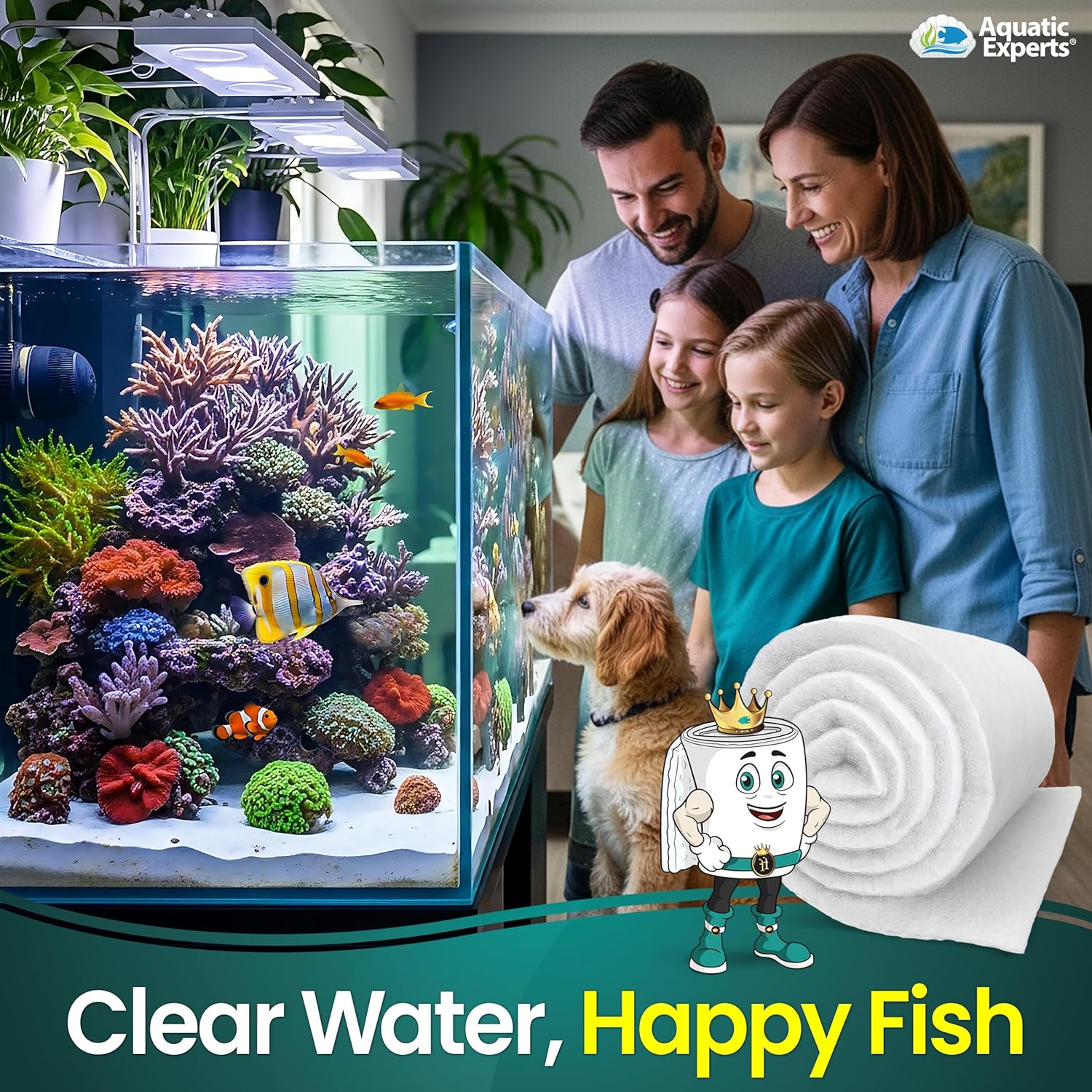
The moment new livestock hits your tank is when most losses happen — not because the fish or shrimp were sick, but because the chemistry shift was too fast. Acclimation is the process of slowly adjusting an animal to your tank’s water (its salinity, pH, and temperature) before you release it. Get that wrong, and even a healthy animal can go into shock. Beyond acclimation, the physical design of your tank can trap or injure small animals, and your filtration media — the material that catches debris and hosts the beneficial bacteria your system runs on — can either protect water quality or quietly undermine it. This guide walks through three categories of affordable gear (drip acclimation kits, cut-to-fit sponge foam, and filter floss) that experienced hobbyists consistently credit with keeping livestock alive. If you have a shrimp tank, a sump, or anything sensitive in the water column, at least one of these applies directly to your current setup.
| EDITOR'S PICKAquatic Experts Aquarium Filter… | Mid-tierAQUANEAT Aquarium Bio Sponge Fo… | Budget pickBorlech 8-Layer Fast-Acting Aqu… | |
|---|---|---|---|
| Dimensions | 12" x 72" | 17" x 11" | 15.75" x 11.81" |
| Thickness | 3/4" - 1" | 1/2" - 1" | 0.6" |
| Layers | — | — | 8 |
| Cut-to-fit | — | ✓ | ✓ |
| Pack count | — | — | 1 |
| Media type | Floss pad | Sponge foam | Floss pad |
| Price | $22.49 | $18.99 | $6.99 |
| See on Amazon → | See on Amazon → | See on Amazon → |
Why Drip Acclimation Is Worth the Extra Hour (and Why Mouth-Siphoning Isn’t)
Traditional float acclimation — floating the bag, adding small cups of tank water every few minutes — works passably for hardy fish. For invertebrates, particularly ornamental shrimp like Neocaridina or Caridina, the margin for error is much tighter. Shrimp are sensitive to osmotic shock (a rapid change in water pressure across their cells caused by salinity shifts), and a 15-minute bag float followed by a dump-and-release is a genuine mortality risk.
Drip acclimation solves this by running a slow, controlled flow of your tank water into the bag or a separate container holding the new animal. The target drip rate for saltwater shrimp — about 2 to 4 drops per second over two to three hours — gives the animal’s physiology time to adjust. The Spruce Pets’ guide to drip acclimation confirms this timeframe as standard practice for invertebrates, and Reef2Reef discussions on acclimation best practices consistently reinforce the three-hour window for sensitive species.
The siphon problem. The traditional method of starting a drip involves placing a piece of airline tubing between the tank and the container, then sucking the end to start a siphon — meaning you’re drawing saltwater into your mouth. It works, but it’s unpleasant enough that many hobbyists skip the step and revert to the riskier float method.
The IOAOI drip acclimation kit addresses this directly with a small primer bulb — the same squeeze-start mechanism you’d find on a lawn mower fuel line — that starts the siphon without contact. Owners consistently report that this one feature removes the biggest friction point in the whole process, making them actually willing to run the full three-hour session instead of cutting it short. Multiple shrimp keepers specifically highlight completing long acclimation runs without needing to babysit — the drip regulator holds the target rate once set, and you walk away.
The decision frame: If you’re keeping saltwater shrimp, freshwater shrimp, or any invertebrate (corals included), a dedicated drip kit isn’t optional equipment — it’s part of your livestock protection stack. For hardy freshwater fish, float acclimation with careful additions is acceptable. Draw the line at anything without scales.
Sponge Barriers: The Cheap Fix That Stops Shrimp Disappearing Into Your Pump Chamber
One of the more frustrating tank mysteries for new shrimp keepers is the disappearing animal. You count eight shrimp at lights-on. A week later, you count five. No bodies. No visible predation. The culprits are usually the gaps and slits in your tank’s filtration compartment — the pump chamber of an all-in-one tank like the Fluval Flex is sized for water flow, not for keeping 1 cm dwarf shrimp out.
Cut-to-fit foam sponge, sold in sheet form, solves this mechanically. You measure the opening — whether it’s a pump chamber slit, an overflow slot, or a return pump intake — cut the foam to fit, and press it into place. The foam passes water while physically blocking shrimp-sized gaps.
The ALEGI sponge foam has developed a notably creative buyer base around exactly this use case. One documented owner use: cutting the foam to fit the chamber slits in a Fluval Flex 32.5-gallon to prevent shrimp from entering the filtration compartment. Another: repurposing the foam as a replacement filter element for a discontinued pet water fountain — the sheet form factor makes it adaptable wherever a proprietary part is no longer manufactured.
Dual-function note: The same foam that acts as a physical barrier also functions as biological filtration — beneficial bacteria colonize the porous surface over time, contributing to your nitrogen cycle (the process by which bacteria convert toxic ammonia from fish waste into less harmful compounds). This matters when you’re planning a replacement schedule. Don’t yank and replace all your foam barriers at once, or you risk crashing a portion of your cycle.
The decision frame: If you’re running an all-in-one tank with dwarf shrimp (freshwater or saltwater), measure your pump chamber openings before livestock arrives. Cut foam to size, test the fit dry, and install before you add animals. If you’re retrofitting after a loss, do it the same day.
Filter Floss: Where “Good Enough” Costs You Water Quality
Filter floss — the fiber pad that mechanically removes fine particles from your water column before they break down and spike ammonia — is one of those products where the quality range is genuinely wide and the consequences of choosing low-end material are real.
What separates good floss from cheap floss: Fiber density and structural integrity across rinse cycles. Low-density floss compresses and loses its form quickly, letting particle-laden water channel around it rather than through it. Experienced reef hobbyists in long-form reviews at Reef2Reef and Advanced Aquarist consistently describe the difference as tactile and immediate — quality floss holds its loft after rinsing; cheap floss mats into a flat sheet.
Aquatic Experts FilterFirst earns a notable pattern of enthusiastic long-form reviews from experienced hobbyists who use it in sump systems. The consistent praise centers on fiber density and the product’s ability to hold shape through multiple rinse cycles — something that matters when you’re rotating media in a sump rather than swapping it out entirely each time.
Borlech 8-layer floss demonstrates the “works too well” edge case worth knowing about: at least one documented reviewer describes inadvertently stripping tannins — the organic compounds responsible for the amber water color in a blackwater betta setup — from a tank by running this floss. Tannins are intentionally maintained in blackwater systems for pH buffering and fish health. If your aesthetic and husbandry depend on tannin-stained water, ultra-dense mechanical filtration can remove what you’re actively trying to keep. This is an honest tradeoff, not a product flaw.
AQUANEAT sponge pads, frequently used in sump prefilter positions, surface a best practice that aggregated buyer behavior makes concrete: owners consistently describe a rotate-and-clean-one-at-a-time method — cleaning half the sponge media this week, the other half next week — specifically to preserve the bacterial colonies living in the foam. TFH Magazine’s coverage of biological filtration design supports this logic: removing all mechanical media simultaneously for cleaning can strip a meaningful fraction of the tank’s beneficial bacteria, causing a temporary ammonia spike.
By the numbers — Filter Floss Decision Quick-Reference:
| Setup | Recommended Floss Weight | Rinse Frequency |
|---|---|---|
| Low-bioload freshwater (planted tank) | Medium density | Every 2–3 weeks |
| High-bioload reef / heavy feeding | High density (FilterFirst tier) | Every 5–10 days |
| Blackwater betta / tannin-dependent | Light floss or none | N/A — risk of tannin strip |
| Sump prefilter | Layered sponge + light floss | Rotate halves alternately |
Putting It Together: The Small-Gear Decision Stack
None of these products competes with a protein skimmer, a quality return pump, or your lighting fixture in terms of budget share. That’s actually the point — this is the tier of gear that’s easy to skip, and where skipping quietly costs you animals.
The pattern across aggregated owner reviews and hobbyist community discussions (per Reef2Reef threads and Practical Fishkeeping’s acclimation guides) is consistent: livestock losses attributed to “unknown causes” or “bad batch” often trace back to one of three moments — the acclimation window, an unguarded pump intake, or a water quality spike that fine mechanical filtration would have caught earlier.
If X, then Y — your decision rules:
- If you keep dwarf shrimp in any all-in-one tank: Cut-to-fit sponge foam in every pump chamber gap, installed before livestock. Non-negotiable.
- If you’re adding invertebrates to a reef or shrimp tank: Run a full drip acclimation (two to three hours, 2–4 drops per second) with a kit that has a primer bulb. The primer removes the friction that causes people to skip the process.
- If your sump has a mechanical prefilter chamber: Use high-density floss like FilterFirst for anything with real bioload; use lighter media or skip floss entirely for blackwater or heavily planted low-bioload systems where you want organic compounds to stay in the water column.
- If you’re cleaning sponge media in a sump: Never clean all of it at once. Rotate halves on alternating schedules to protect your cycle.
The gear that saves livestock is rarely the gear you’ll brag about. A drip kit, a sheet of foam, and quality filter floss represent maybe $40–60 in combined investment. The shrimp colony, coral frag, or rare centerpiece fish they protect is worth multiples of that. Know the tradeoffs, buy the right tier for your application, and install it before the animals arrive.
Frequently Asked Questions
Will fine filter floss strip tannins from a blackwater betta tank? Yes — this is a documented real-world outcome, not a theoretical concern. Ultra-dense mechanical filtration captures fine organic particles, and tannins (the compounds that give blackwater its amber color and mild acidity) fall in that range. If your betta tank depends on tannin-stained water for pH stability or aesthetic, use lighter floss or position it to bypass the main water column, and check water color after any media change. Per Aquatic Plant Central’s guidance on blackwater chemistry, tannin levels are sensitive to filtration changes.
How do I use cut-to-fit sponge foam to stop shrimp from entering pump chambers in a Fluval Flex? Measure the width and height of the pump chamber slit with a ruler, then cut your sponge sheet to fit snugly — you want light compression, not a forced fit that could warp the chamber wall. Press the cut piece into the opening. Water will pass through; shrimp won’t. Check fit weekly for the first month; foam can compress slightly and shift. Replace if it starts to mat flat or if gaps open up at the edges.
How often should I replace or rinse filter floss in a sump? This depends entirely on bioload. High-feeding reef systems with significant fish load may need floss rinsed or replaced every five to ten days. Low-bioload planted freshwater setups can stretch to two to three weeks. The tell is flow rate — if water is channeling around the floss rather than through it, or if the pad is visibly discolored and compressed, it’s time. Rinse with tank water (not tap, which can kill bacteria), and replace when it no longer holds shape after rinsing.
Can I use the same sponge foam for both mechanical and biological filtration? Yes, and this is actually how most sponge media functions in practice. The foam traps particles mechanically while beneficial bacteria colonize its surface biologically over time. The key implication: treat it like biological media when cleaning. Never replace all sponge at once, and always rinse in old tank water, not chlorinated tap water.
What is the correct drip rate for acclimating saltwater shrimp with a drip kit? The standard rate cited by The Spruce Pets’ acclimation guide and supported by Reef2Reef community practice is 2 to 4 drops per second over a two-to-three-hour session. Slower is generally safer for sensitive species. Once the drip container’s volume has roughly doubled from your starting water volume, the animal is ready for transfer. Discard the mixed water — don’t add it to your display tank.
Does thicker filter floss always mean better filtration, or can it clog too fast? Thicker, denser floss captures finer particles — but yes, it clogs faster in high-bioload systems. The tradeoff is capture rate versus maintenance frequency. In a heavily fed reef, ultra-dense floss may need attention every five days; lighter floss might last two weeks but let more fine particles pass into the sump. Match floss density to your cleaning schedule willingness, not just to your bioload. Advanced Aquarist’s coverage of mechanical filtration design frames this as a flow-rate-versus-particle-capture optimization — there’s no universally correct answer, only the right answer for your specific system and your maintenance habits.