Reef Salt Delivery Damage, Batch Variance, and Shipping Realities: What Buyers Discover Too Late
Reef salt is the foundation of a saltwater aquarium — a dry mix of minerals and trace elements that, when dissolved in fresh water, recreates seawater chemistry close enough for coral, fish, and invertebrates to survive and thrive. Most hobbyists buy it in large buckets or multi-bag boxes delivered by freight or parcel carriers. That delivery step sounds simple, but it’s where a surprising number of tank problems actually begin — long before the salt ever touches your water. Damaged packaging, salt leaking in transit, delayed deliveries that drain your backup supply, and subtle batch-to-batch variation in the salt’s chemical makeup are recurring, brand-agnostic issues that reef keepers tend to discover only after something goes wrong in the tank. This article maps the full pattern, explains the chemistry behind why it matters, and gives you a clear protocol for ordering, receiving, and mixing reef salt so you’re protected at every step.
The Shipping Problem Is Worse Than the Brands Admit
Large-format reef salt — the 200-gallon buckets and 25-kilogram boxes that serious reef keepers buy — is dense, heavy, and awkward for standard parcel networks. Carriers treat these shipments like any other box. The result is predictable.
Owners of Red Sea Reef large buckets have reported across multiple consecutive orders that buckets arrived with no protective outer packaging whatsoever — no cardboard sleeve, no shrink wrap, no pallet buffer — with salt actively leaking from the base seam. This isn’t a one-off quality control miss; the pattern across aggregated reviews points to a fulfillment practice, not a manufacturing defect. The bucket itself may be intact but the seal at the base fails under the compressive stress of being stacked or dropped during transit.
Red Sea Coral Pro large bucket owners report a separate but related problem: delivery delays running three times the stated timeframe. When your tank is running and a water change is due, a ten-day delay on a two-day estimate forces an emergency run to a local fish store — often at two to three times the per-gallon cost of bulk ordering.
Fritz Pro owners report a lower-severity but consistent version of the same story: broken inner bags within multi-pack box sets, with one bag in a four-pack arriving compromised. The salt itself may be uncontaminated if the outer box held, but the bag breach raises legitimate questions about moisture exposure.
The through-line across brands: reef salt packaging is optimized for warehouse storage, not last-mile parcel delivery. Buyers absorb that gap.
Batch Variance: The Invisible Risk Inside an Intact Bucket
Shipping damage is visible. Batch variance is not — and that makes it more dangerous for your livestock.
Batch variance means that the chemical composition of a reef salt can shift measurably from one production run to the next, even within the same product line and brand. The parameters most commonly affected are magnesium, alkalinity (carbonate hardness, measured in dKH), and calcium. In a stable reef system — especially one keeping SPS corals (small polyp stony corals like Acropora and Montipora, which require very precise, stable water chemistry) — even a moderate deviation in any of these parameters can stress or bleach livestock.
The clearest documented example in owner reports involves Red Sea Reef salt, where one owner measured magnesium at 1,100 ppm from a new bucket mixed to the manufacturer’s salinity specification. The target for most reef systems is 1,250–1,350 ppm. A reading of 1,100 ppm represents a roughly 15–20% deficiency. The owner flagged the batch as potentially defective — which it may well have been — but the underlying mechanism is worth understanding: trace element ratios in synthetic salt are not perfectly stable across production batches, and quality control tolerances at the manufacturing level can permit variation that exceeds what sensitive coral systems tolerate.
A separate Coral Pro owner report describes a pH drop following a large water change. This is a coherent chemical scenario: if a batch mixed slightly low on alkalinity-contributing compounds (carbonates and bicarbonates), a high-volume water change would pull the tank’s total alkalinity down, and pH would follow within hours. The owner likely attributed this to the water change itself rather than the batch, which is the intuitive explanation — but the salt is the actual variable.
As Coral Magazine’s water chemistry coverage has noted across multiple features, the most common source of unexplained parameter swings in otherwise stable reef systems is a new salt container, not a change in husbandry.
By the Numbers
| Parameter | Typical Reef Target | Low-Variance Brand Tolerance | Problem-Batch Observed Range |
|---|---|---|---|
| Magnesium | 1,280–1,350 ppm | ±50 ppm | As low as 1,100 ppm (owner-reported) |
| Alkalinity | 8.0–9.5 dKH | ±0.5 dKH | ±1.5–2.0 dKH (batch-dependent) |
| Calcium | 420–450 ppm | ±10 ppm | ±25–40 ppm (batch-dependent) |
Figures synthesized from Advanced Aquarist’s synthetic salt evaluation and aggregated Reef2Reef owner reports.
The Consistency Argument for Workhorse Salts
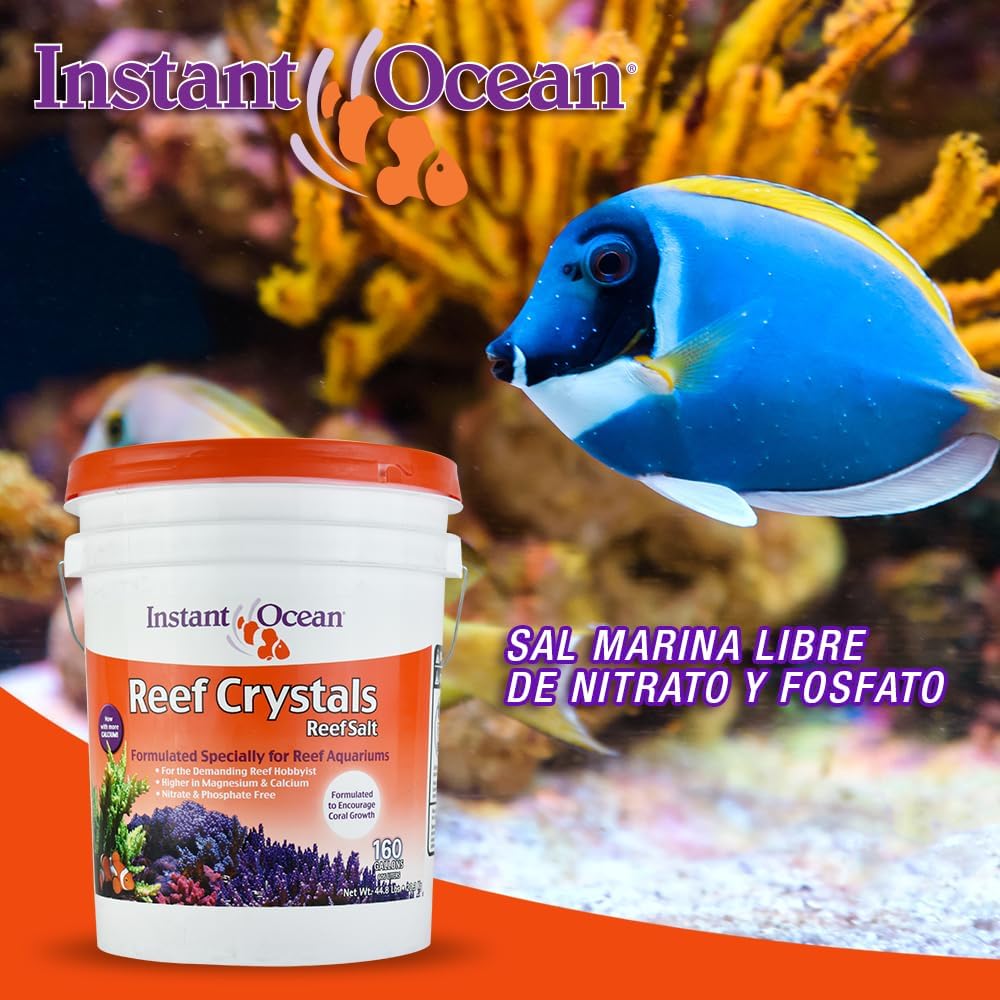
Not every salt earns the same variance complaint. Instant Ocean Reef Crystals has accumulated a notably different owner profile across long-run reviews: consistent parameters, reliable dissolution, and a pattern of hobbyists returning to it for decades specifically because it doesn’t surprise them.
One 30-year hobbyist’s review of Reef Crystals, widely cited in Reef2Reef discussions, describes it plainly: not the most nutrient-rich salt on the market, not the one with the most impressive trace element list on the label, but deeply reliable. That framing matters for the decision you’re actually making. For SPS systems where parameter stability is more critical than elevated baseline levels (which you’re supplementing with dosing anyway), predictability has concrete value. A salt that mixes to 8.5 dKH every time is operationally superior to one that targets 9.0 dKH but delivers anywhere from 7.5 to 10.5.
Reef Builders and Advanced Aquarist have both covered the reliability-versus-richness tradeoff in salt selection: premium salts formulated for SPS (higher alkalinity, elevated trace elements) tend to show wider batch variance than workhorse salts formulated for broader compatibility. Whether that tradeoff is worth it depends entirely on whether you’re supplementing anyway.
The Right Mixing Protocol (And Why It Protects You from Batch Problems)
The single most effective defense against both shipping damage consequences and batch variance damage is testing before the water change, not during. That sounds obvious, but the standard hobbyist practice — mix, check salinity, change water — skips the step that would catch a defective batch.
Here is the protocol that experienced hobbyists have converged on, formalized from the practices described in Reef2Reef community forums and Practical Fishkeeping’s saltwater setup guides:
-
Use a dedicated mixing container with a heater and a small circulation pump. A 32-gallon Brute trash can with a submersible heater and a modest powerhead is the most commonly cited setup. This is not optional for reefs — temperature-matching your change water to tank temperature prevents thermal shock stress on coral.
-
Mix for a minimum of 24 hours before testing. Reef salts contain compounds that take time to fully dissolve and equilibrate. Testing at two hours will give you readings that don’t reflect the fully mixed solution. Twenty-four hours is the floor; 36–48 hours is better for SPS systems.
-
Test the new batch for all three major parameters before every water change from a new container. Test alkalinity, calcium, and magnesium. This takes ten minutes with a standard liquid test kit. If any reading falls outside your target range, do not proceed. Contact the manufacturer with your batch number before diluting the batch into your system.
-
Log your batch number and readings. If you see a drift over time — two consecutive buckets reading low on magnesium, for example — you have documented evidence for a warranty or replacement claim, and you catch the trend before it harms livestock.
Frequently Asked Questions
What should I do if my reef salt bucket arrives damaged or leaking? Photograph the packaging and the bucket before opening anything. Document the leak point, the outer box condition, and any visible salt loss. Contact both the carrier and the retailer immediately — most retailers will process a replacement or refund for freight damage with photo documentation, but the window for filing is typically 48–72 hours from delivery. Do not discard packaging until the claim is resolved.
How long should I mix reef salt before testing and using it for a water change? A minimum of 24 hours with active circulation and a heater set to match your display tank temperature. For SPS systems or any tank where alkalinity stability is critical, extend this to 36–48 hours. Test alkalinity, calcium, and magnesium from the mix container before proceeding.
Why did my coral or fish react badly after a water change with a new bucket of the same salt I always use? The most likely explanation is batch variance — the new container mixed to different parameter levels than your system is calibrated to. Even a 1.5 dKH drop in alkalinity from a high-volume water change can stress SPS within hours. Open the new container, mix a small test batch, and test its parameters against your established benchmarks before doing another water change. If the numbers are off, you’ve identified the source.
How much salt should I keep in reserve so I’m never caught short? The standard recommendation among experienced reef keepers is a minimum of one full water-change cycle worth of pre-mixed or dry salt on hand at all times. For most systems doing 10–15% weekly changes, that means enough salt for at least two changes. Given the delivery delay reports described above, ordering your replacement before your current supply drops below 25% is a reasonable rule.
Is it safe to use reef salt from a bucket that arrived with a cracked lid if the salt looks dry and uncontaminated? Visually dry salt is not a reliable indicator of moisture exposure. Salt absorbs water vapor invisibly, and even minor humidity ingress can alter the dissolution behavior and parameter profile of the mix. If the lid crack was significant enough to allow air exchange during a multi-day transit, test the batch rigorously before use. If alkalinity or calcium reads unusually high or low compared to your established baseline from the same product, treat the batch as compromised and contact the retailer.
Which reef salts mix most consistently batch to batch for SPS systems? Based on aggregated owner reports across Reef2Reef and Advanced Aquarist’s published evaluations, Instant Ocean Reef Crystals has the strongest long-run consistency record among widely available salts. It is not formulated for the elevated parameter targets some SPS keepers prefer, but its batch-to-batch reliability is consistently cited as its defining advantage. For reef keepers who are already running automated two-part or calcium reactor supplementation, the baseline parameter question matters less than the variance question — and on variance, the workhorse salts have a documented edge over premium formulations.
The Decision Rule
If you are running a mixed reef or SPS system and parameter stability is your primary concern: optimize for batch consistency over label-level parameter targets, maintain a two-change reserve supply at all times, mix for 48 hours before testing, and test every new container before it touches your display tank.
If you experience delivery damage on any brand: document immediately, file within 48 hours, and never assume the salt inside an intact-looking bucket is unaffected by a cracked or compromised lid.
The brands that produce the most consistent salt aren’t always the ones with the most impressive marketing. The protocol that protects your livestock isn’t complicated — it just requires doing the test before the water change, not after.