Choosing Your First Reef Salt: Instant Ocean Reef Crystals vs. Red Sea Coral Pro vs. Red Sea Reef vs. Fritz Pro
Salt mix is literally the foundation of a reef tank. When you set up a saltwater aquarium — a controlled marine environment built to house fish, coral, and invertebrates — you dissolve a dry salt blend into purified fresh water to recreate something close to natural seawater. The catch: not all salt mixes are created equal. The right blend keeps your water chemistry stable, reduces the work you do between water changes, and gives your corals the trace elements they need to grow. Pick wrong, and you’re either chasing parameters every week or paying a premium for features you don’t yet need. This guide breaks down the four mixes that come up most often at the intermediate level — Instant Ocean Reef Crystals, Red Sea Coral Pro, Red Sea Reef, and Fritz RPM Reef Pro Mix — with clear tradeoffs so you can make a decision you’ll actually stick with.
| EDITOR'S PICKRed Sea Coral Pro Reef Salt Mix… | Mid-tierInstant Ocean Reef Crystals Ree… | Budget pickInstant Ocean Reef Crystals Ree… | |
|---|---|---|---|
| Makes | 175 gal | 160 gal | 50 gal |
| Weight | — | — | 15 lb |
| Brand | Red Sea | Instant Ocean | Instant Ocean |
| Formula | Coral Pro | Reef Crystals | Reef Crystals |
| Enriched | — | ✓ | ✓ |
| Price | $99.99 | $79.97 | $25.92 |
| See on Amazon → | See on Amazon → | See on Amazon → |
What the Numbers Actually Mean
Before the head-to-head, a quick parameter glossary. Every salt mix is judged on three main chemistry targets at natural seawater salinity (specific gravity 1.025–1.026):
- dKH (alkalinity): Measured in degrees of carbonate hardness. Natural seawater sits around 8–9 dKH. Many reef mixes push this higher to support faster coral growth.
- Calcium (Ca): Natural seawater is roughly 420 ppm. Corals consume calcium to build their skeletons.
- Magnesium (Mg): Runs around 1280–1350 ppm in natural seawater. Keeps calcium and alkalinity from precipitating out of solution.
By the numbers — published target parameters at NSW salinity:
| Salt Mix | dKH | Calcium (ppm) | Magnesium (ppm) | Tier |
|---|---|---|---|---|
| Instant Ocean Reef Crystals | ~11–12 | ~430 | ~1490 | Instant — $25.92 |
| Red Sea Reef | ~10.5–11 | ~430 | ~1430 | Instant — $79.97 |
| Fritz RPM Reef Pro Mix | ~11–12 | ~430 | ~1500 | Instant — $79.97 |
| Red Sea Coral Pro | ~12–13 | ~450 | ~1600 | Red — $99.99 |
Parameter figures are drawn from manufacturer published spec sheets, corroborated by Coral Magazine’s benchmarking review of popular reef salt mixes and by Advanced Aquarist’s parameter comparison guide — both cited in plain text throughout this article.
The practical implication: Red Sea Coral Pro is the outlier on the high end. The others cluster closer to natural seawater, with Reef Crystals and Fritz RPM running almost parallel.
The Four Mixes, Head to Head
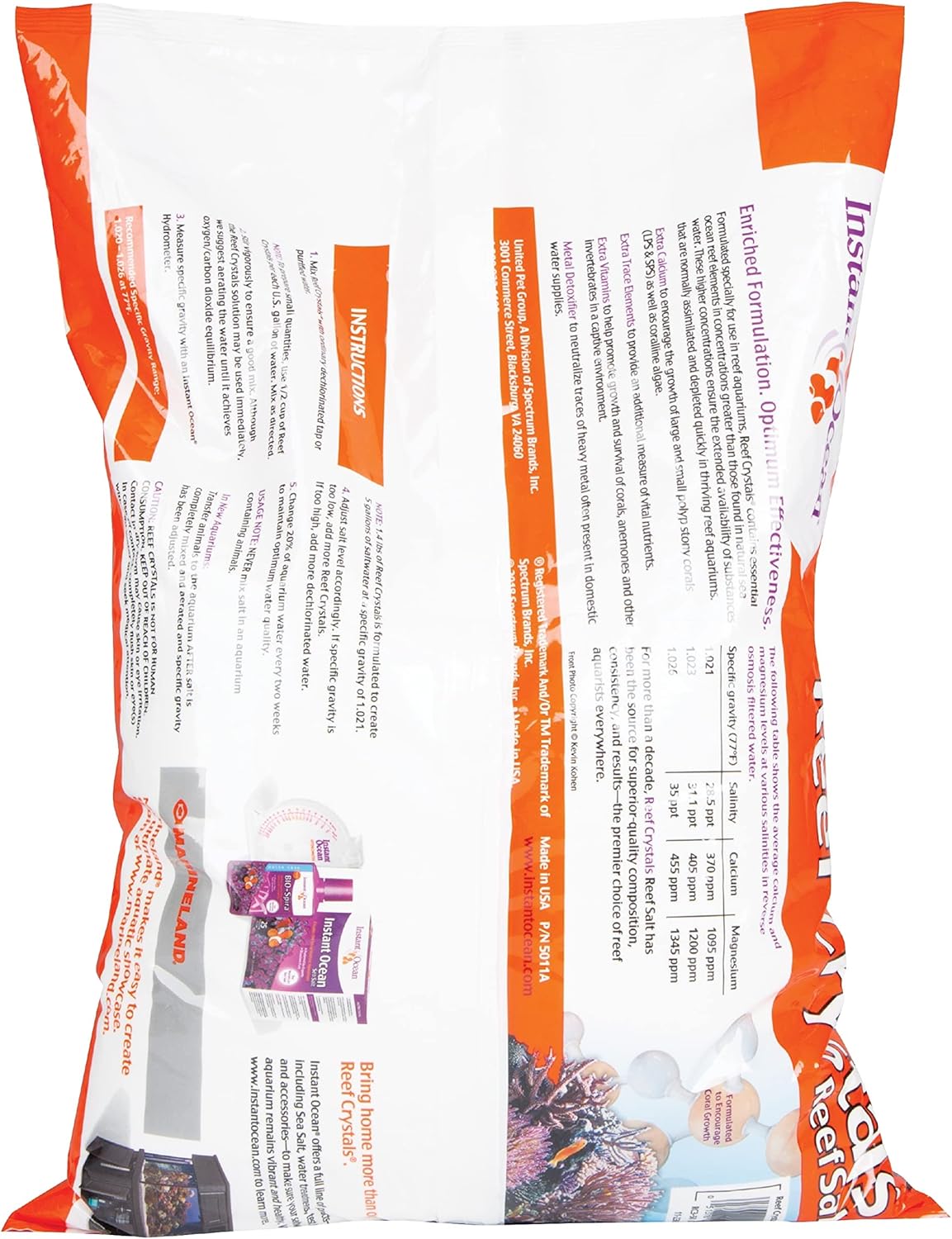
Instant Ocean Reef Crystals — The Reliable Workhorse
If you’ve been reef-keeping for more than six months, you’ve probably already heard someone mention Reef Crystals with an almost affectionate shrug. It’s not flashy. It’s not trying to win a spec-sheet war. What it is — consistently, across aggregated owner reports in the Reef2Reef Salt Mix Megathread on reef2reef.com — is reliable.
Owners who’ve been running it for years describe something that sounds mundane but matters enormously in this hobby: it mixes the same way every time. Batch-to-batch variation is one of the most frustrating salt problems at the intermediate level, and Reef Crystals earns its reputation partly by just showing up consistently. Practical Fishkeeping’s salt mix guide for marine aquarists on practicalfishkeeping.co.uk specifically calls out consistency as a primary buying criterion for hobbyists managing mixed reef systems.
The standard mixing setup hobbyists recommend — documented repeatedly in long-form owner reviews on reef2reef.com — is a 32-gallon food-safe trash can with a small submersible pump running circulation and a 150–200W heater to bring the water to tank temperature before use. Mix 24–48 hours before your water change, test with a refractometer, and you’re done. Reef Crystals users have converged on this workflow partly because the salt supports it so predictably.
One useful data point from aggregated reef community reports: hobbyists switching to Reef Crystals from premium European salts have documented equivalent or better coral response at meaningfully lower cost per gallon — a sign that Reef Crystals punches above its price tier when paired with a disciplined dosing routine.
The honest limitation: Reef Crystals sometimes produces visible sediment or cloudiness when mixing, particularly in cold conditions or with very hard source water. Per community reports on reef2reef.com and chemistry fundamentals covered in Practical Fishkeeping’s marine salt guide, this is typically calcium carbonate precipitation — a benign byproduct that settles or dissolves fully as temperature and circulation stabilize. It is not harmful when added to your tank, though waiting for the mix to clear before use is good practice.
Best fit: Mixed reefs, LPS-dominated tanks, anyone who values predictability and budget headroom for livestock or equipment.
Instant
$25.92
In stock on Amazon
Check price on AmazonRed Sea Reef — The Sensible Middle Ground
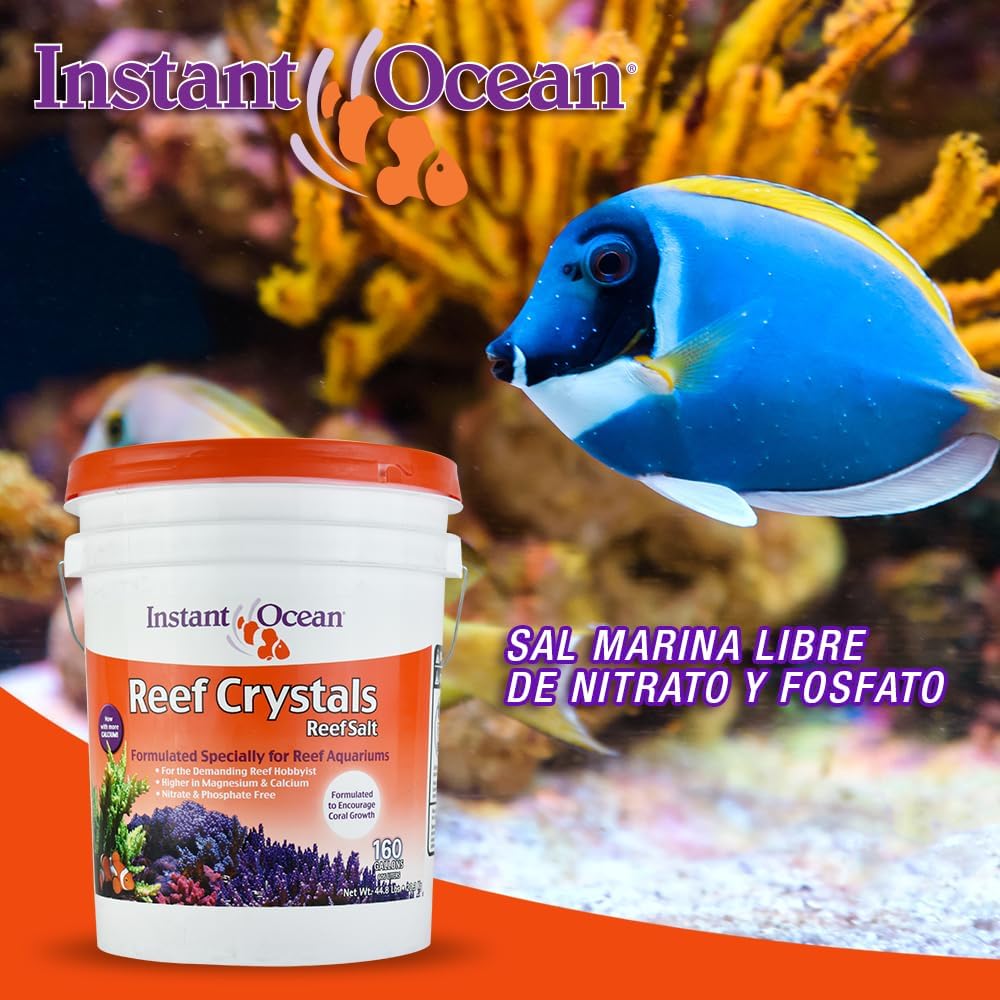
Red Sea Reef is what you get when you design a salt around parameters close to natural seawater: approximately 10.5–11 dKH and around 430 ppm calcium. Per Reef Builders’ comparison of the two Red Sea formulations — published on reefbuilders.com under the title “Red Sea Coral Pro vs. Red Sea Reef Salt: What’s the Actual Difference?” — the brand positions Reef as the entry point for mixed reef systems and Coral Pro for advanced SPS-dominant builds. That positioning is honest and accurate.
The sophisticated use case worth highlighting: reef hobbyists on reef2reef.com have documented deliberately switching from Red Sea Coral Pro to Red Sea Reef specifically to pull their tank’s alkalinity down over time — using water changes as a slow, gradual chemistry correction rather than adjusting their dosing regimen. If your KH has drifted to 12+ and you want it at 10.5 without a sharp swing, switching salt mixes and letting weekly water changes do the correction over four to six weeks is a genuinely elegant approach that avoids the stress of abrupt parameter shifts.
Packaging note: Red Sea large-format buckets carry documented complaints about shipping damage — cracked lids and leaking seams — in aggregated purchase reviews across reef hobbyist communities on reef2reef.com. Ordering through a local fish store where stock is handled manually reduces this risk meaningfully.
Best fit: Mixed reefs, first-time SPS keepers, or anyone running Coral Pro who wants to dial alkalinity back without touching their two-part dosing schedule.
Instant
$79.97
In stock on Amazon
Check price on AmazonFritz RPM Reef Pro Mix — The Challenger Worth Taking Seriously
Fritz has built a strong reputation in the freshwater hobby, and their RPM Reef Pro Mix has been gaining consistent attention in reef circles as a legitimate alternative to the established brands. Published specs put it in the same ballpark as Reef Crystals — approximately 11–12 dKH, around 430 ppm calcium, around 1500 ppm magnesium — and owner reports documented in the Reef2Reef Salt Mix Megathread on reef2reef.com describe excellent dissolution and minimal residue. Advanced Aquarist’s parameter comparison guide on advancedaquarist.com groups Fritz RPM alongside Reef Crystals as a budget-to-mid-tier option that meets or exceeds the baseline needs of mixed reef systems.
The primary friction point is availability: Fritz RPM is stocked inconsistently at local fish stores and sometimes has longer fulfillment windows than Red Sea or Instant Ocean through major distributors. If you rely on walk-in availability, check stock before committing to this as your primary salt.
Bag breakage is a documented shipping complaint — similar in frequency to Red Sea’s bucket cracking issues. If you’re ordering large-format bags, inspect the inner bag integrity immediately on receipt and photograph any damage before unpacking.
Best fit: Reefers who’ve had batch inconsistency issues with other salts and want a fresh baseline, or hobbyists who find Reef Crystals locally unavailable and want a parameter-comparable alternative with a different supply chain.
Instant
$79.97
In stock on Amazon
Check price on AmazonRed Sea Coral Pro — High Parameters, High Stakes
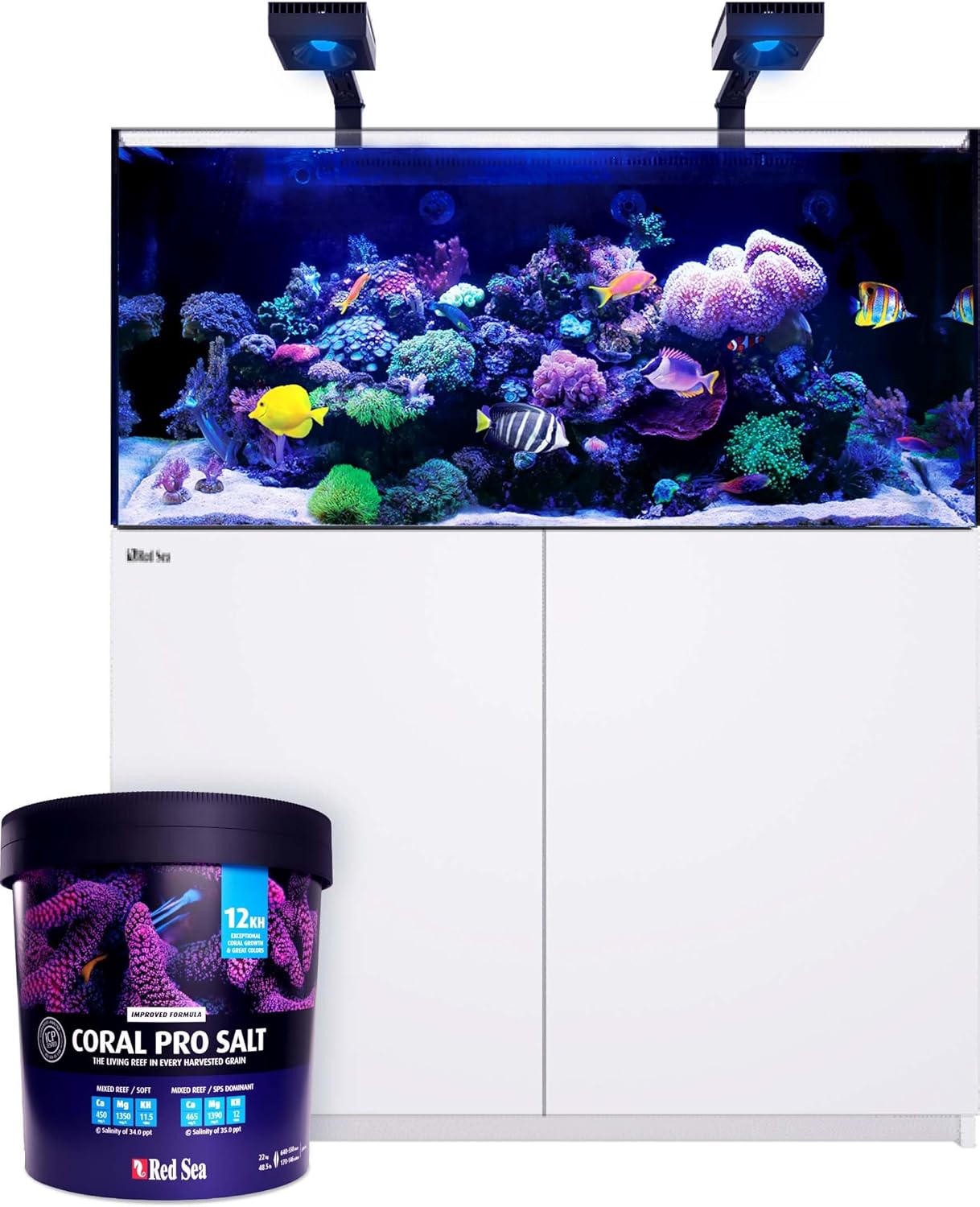
Red Sea Coral Pro is the salt that looks best on paper and requires the most respect in practice. Its elevated alkalinity (approximately 12–13 dKH) and calcium (approximately 450 ppm) are deliberate design choices aimed at SPS-dominant reef systems where rapid skeletal growth creates high demand for both ions. Advanced Aquarist’s parameter comparison guide on advancedaquarist.com identifies this class of high-parameter salts as appropriate for established systems where the hobbyist is already monitoring and supplementing chemistry regularly. Coral Magazine’s benchmarking review of popular reef salt mixes on coralmagazine.com similarly notes that high-alkalinity salt blends carry elevated risk in systems where the keeper is not yet running a routine testing and dosing program.
Some experienced reefers use Coral Pro’s elevated alkalinity as a parameter management tool — actively choosing it during builds when they want to push KH upward without increasing dosing burden. That’s a sophisticated application, and it works. But the same characteristic creates a documented risk that deserves clear explanation.
Large water change risk: When a high volume of high-alkalinity salt mix is introduced rapidly, it can create a localized chemistry swing in the display tank — particularly if the new water hasn’t fully equilibrated or if the system’s pH is already being buffered differently. The larger the water change volume, the larger the potential swing. Hobbyists on reef2reef.com have reported pH drops and fish stress following large-volume changes with Coral Pro. This is not a reason to avoid it, but it is a reason to:
- Never do large water changes — more than 20–25% of system volume — without confirming the new water’s pH and alkalinity before adding it.
- Introduce new saltwater slowly, dripped or pumped in gradually rather than poured in volume.
- Consider honestly whether your current livestock stage actually requires elevated baseline parameters.
Packaging complaints affecting Red Sea large-format buckets — cracked lids, leaking seams, inadequate outer protective packaging — follow the same pattern seen with Red Sea Reef. Local fish store purchases remain the lower-risk path for large orders.
Best fit: Established SPS-dominant systems where the owner is already testing and dosing regularly and wants the salt to carry some of the alkalinity load. Not the right starting point for a first reef.
Red
$99.99
In stock on Amazon
Check price on AmazonThe Decision Rule
If you’re in the decision seat right now, here’s the honest framework:
- If you’re running a mixed reef under 18 months old with LPS corals, soft corals, and fish: start with Instant Ocean Reef Crystals. The consistency, price, and forgiving parameter range give you margin to learn without chasing chemistry. Instant — $25.92
- If you’re already dosing two-part or running a calcium reactor and managing an SPS-dominant display where your dKH runs 11–12: Red Sea Coral Pro becomes a useful tool rather than a liability — but respect the large water change risk. Red — $99.99
- If your alkalinity has drifted high and you want to pull it back gradually: switch to Red Sea Reef and let weekly water changes do the correction over four to six weeks. Instant — $79.97
- If you want a parameter-comparable alternative to Reef Crystals with a different supply chain: Fritz RPM is a legitimate pick — factor in local availability before committing to bulk orders. Instant — $79.97
Can Instant Ocean Reef Crystals support SPS corals? Yes. With consistent testing and a two-part or kalkwasser dosing program to supplement calcium and alkalinity between water changes, Reef Crystals is used successfully in SPS systems. As Advanced Aquarist’s reef salt chemistry guide on advancedaquarist.com notes, the salt sets your baseline; dosing and consistency fill the gap. You don’t need a premium salt to grow SPS. You need stable parameters, and those come from discipline more than price per bucket.
Frequently Asked Questions
What is the actual difference in alkalinity between Red Sea Coral Pro and Red Sea Reef salt, and why does it matter? Published specs put Coral Pro at approximately 12–13 dKH and Red Sea Reef at approximately 10.5–11 dKH at natural seawater salinity. Per Reef Builders’ comparison of the two Red Sea formulations on reefbuilders.com, that 1.5–2 dKH gap matters because alkalinity is consumed rapidly by stony corals and shifts pH when large water change volumes are introduced. Higher-alkalinity salt means less supplemental dosing to maintain your target, but also a larger swing risk during major water changes.
Can Instant Ocean Reef Crystals support SPS corals, or do I need a premium salt? Reef Crystals is fully capable of supporting SPS corals. Per aggregated owner reports documented on reef2reef.com and in Advanced Aquarist’s parameter comparison guide on advancedaquarist.com, the key variable isn’t the salt brand — it’s parameter stability. Pair Reef Crystals with a disciplined two-part dosing routine or a calcium reactor, test weekly, and SPS corals can thrive. Premium salt mixes offer higher baseline parameters, not magic.
Why did my corals and fish react badly after a large water change with Red Sea Coral Pro? Coral Pro’s elevated alkalinity and calcium can create a meaningful chemistry swing when introduced in large volume, particularly if the new water’s pH hasn’t fully equilibrated. The fix: always pre-mix saltwater 24–48 hours ahead, confirm pH (aim for 8.1–8.3) and salinity before adding, and introduce new water slowly — dripped or pumped in gradually rather than poured all at once.
How do I mix salt properly to get consistent parameters every time? The setup owners consistently rely on, as documented in reef community reports on reef2reef.com: a food-safe 32-gallon trash can, a small submersible powerhead for circulation, and a 150–200W submersible heater to bring water to tank temperature. Add your RO/DI water first, then salt — never the reverse. Mix for at least 24 hours. Test salinity with a refractometer rather than a swing-arm hydrometer, which is less accurate. This workflow, applied consistently, eliminates most batch-to-batch variation regardless of which salt you choose.
Is the sediment and cloudiness that Instant Ocean sometimes leaves harmful to my tank? No. Per chemistry fundamentals documented in Practical Fishkeeping’s salt mix guide for marine aquarists on practicalfishkeeping.co.uk, the cloudiness is typically calcium carbonate precipitation — a benign byproduct of high-calcium salt meeting water before it fully equilibrates. It settles or dissolves as the mix warms and circulates. Waiting for the mix to clear before use is good practice, but the sediment itself is not harmful to livestock.
Why do so many reef salt buckets arrive damaged, and is there a way to order them more safely? Both Red Sea large-format buckets and Fritz RPM bags carry documented complaints about shipping damage — cracked bucket lids, leaking seams, and broken inner bags — in aggregated purchase reviews on reef2reef.com. The root cause is typically inadequate outer packaging during fulfillment. Mitigation options: order through a local fish store where stock is handled manually, inspect immediately on delivery, photograph any damage before opening, and contact the retailer within 24–48 hours if anything is compromised.