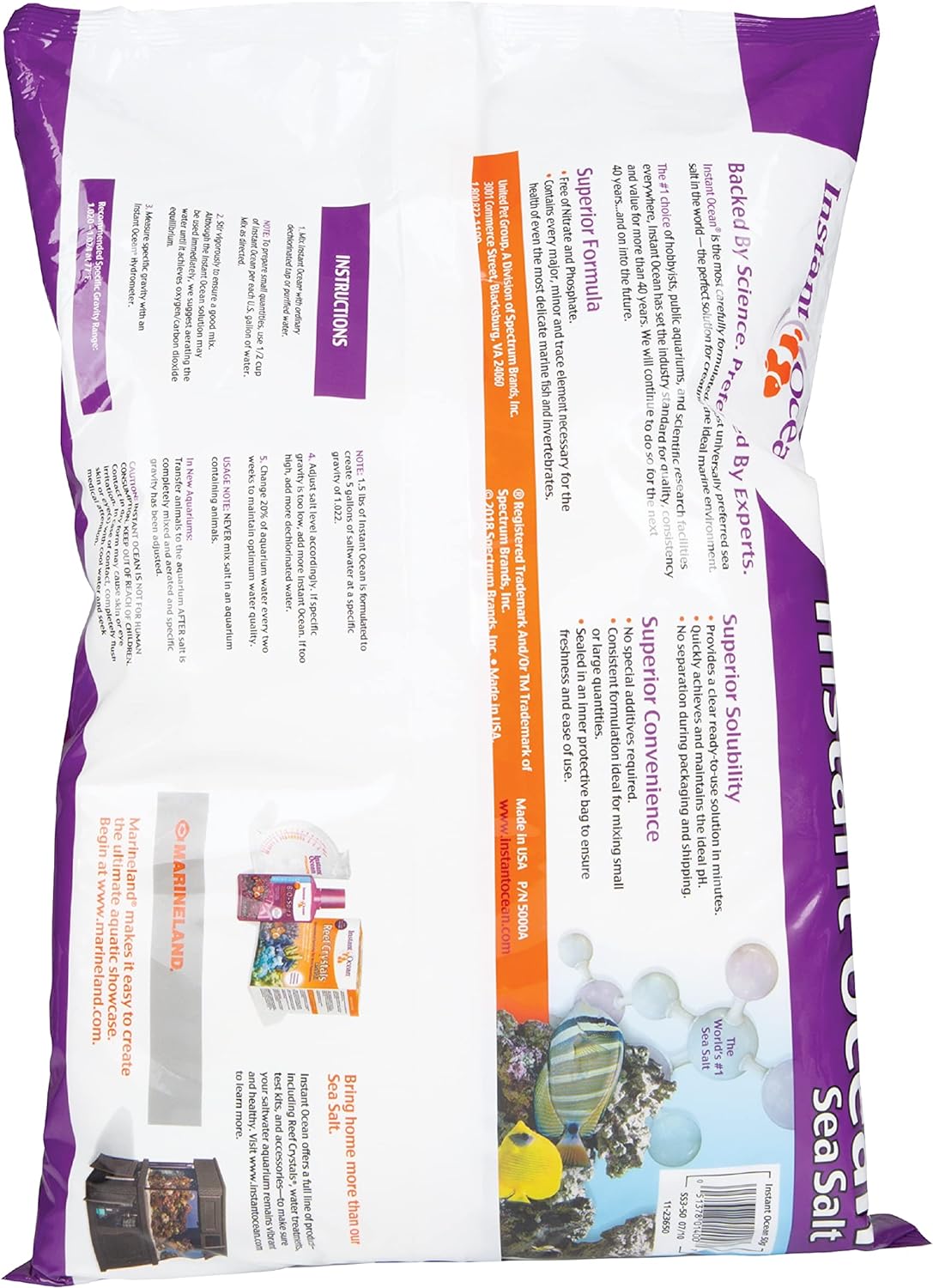
If you’ve ever mixed up a bucket of saltwater for a water change and wondered why it matters which brand of salt you buy — this article is for you. Reef salt mix is the synthetic blend of minerals and trace elements you dissolve in fresh water to create artificial seawater for your aquarium. For a fish-only tank, minor differences between brands are mostly academic. But if you’re keeping SPS corals — small-polyp stony corals like Acropora, Montipora, and Stylophora, which are extremely sensitive to water chemistry — even small, random shifts in a salt mix’s chemistry from one production batch to the next can stress or kill livestock worth hundreds of dollars. This guide breaks down exactly what “batch consistency” means, which parameters matter most, how to read the data manufacturers publish, and which salt mixes have earned the most trust among serious SPS keepers. By the end, you’ll have a clear framework for choosing a salt that fits your system — and a decision rule you can apply before you hit buy.
Why Batch Consistency Is the Right Question to Ask
Most salt mix marketing focuses on what a product targets: NSW (natural seawater) parameters, elevated two-part levels for reef growth, or a “clean” trace element profile. Those targets matter, but they’re only half the story.
The other half is variance — how much does the actual mix drift from those targets, and does it drift the same way every time you open a new bucket?
SPS corals are alkalinity-sensitive above almost everything else. Alkalinity (also called carbonate hardness or dKH — a measure of the water’s buffering capacity, specifically its ability to hold a stable pH and supply carbonate ions for coral skeleton-building) is the parameter that causes the most SPS losses when it swings. A target of 8.3 dKH means little if one bucket mixes to 8.0 and the next mixes to 9.2. That 1.2-point spread isn’t catastrophic in isolation, but if you’re doing weekly water changes at 15–20%, you’re introducing that variance directly into your display.
Reef2Reef’s long-running salt mix batch testing megathread — one of the most comprehensive community-sourced datasets on the subject — documents instances where hobbyists received sequential buckets of the same brand with alkalinity variance exceeding 1.5 dKH at the same salinity. Advanced Aquarist’s foundational review of synthetic sea salts (Shimek, R.) notes that calcium, magnesium, and alkalinity are the three parameters most likely to show meaningful batch-to-batch deviation, and that the ratio between calcium and alkalinity is as important as either value in isolation.
The Parameters That Actually Move the Needle
For SPS systems, rank your concern in this order:
| Parameter | Target Range (NSW-style) | Why Variance Hurts SPS |
|---|---|---|
| Alkalinity (dKH) | 7.5 – 8.5 | Drives skeletal calcification; swings cause STN/RTN |
| Calcium (ppm) | 400 – 420 | Imbalance with alk creates precipitation risk |
| Magnesium (ppm) | 1250 – 1350 | Low Mg allows Ca/Alk to crash; buffers chemistry |
| Salinity / specific gravity | 1.025 – 1.026 | Affects all ionic concentrations downstream |
| pH at mix time | 8.0 – 8.3 | Low pH salt can introduce CO2 stress early |
Trace elements (iodine, strontium, potassium, etc.) matter for long-term coral coloration and health, but they’re secondary to the big three for batch consistency purchasing decisions. If your calcium, alkalinity, and magnesium are stable across buckets, you have a foundation you can dose and adjust around. If they’re volatile, no amount of two-part dosing fully compensates for the moving baseline.
How to Actually Read Manufacturer Data — and When to Trust It
Most premium salt manufacturers now publish batch test data, either by lot number printed on the bucket or through a QR code system. This is progress. But not all published data is equally useful.
What good batch data looks like: A calcium reading of 415 ± 5 ppm and an alkalinity of 8.2 ± 0.2 dKH across 10+ tested lots, measured at a specific salinity (usually 35 ppt or 1.025 SG). Tight standard deviations across multiple independent lots are the signal you want.
What to be skeptical of: A single “typical analysis” number with no variance data, or testing conducted only at the manufacturer’s own facility with no third-party verification. Coral Magazine’s investigative feature “What Your Salt Mix Is Really Telling You” highlighted that several mid-tier brands publish single-point averages that mask significant lot-to-lot swings — numbers that look great on a sell sheet but don’t reflect what a hobbyist actually mixes at home.
Third-party ICP verification: Triton Research maintains a public archive of ICP-OES (Inductively Coupled Plasma Optical Emission Spectrometry — a laboratory method for measuring dozens of elemental concentrations simultaneously) batch reports submitted by hobbyists. This is the closest thing the hobby has to independent, crowd-sourced quality control. Searching a brand’s name in that archive will show you real-world variance that manufacturer PDFs may not. Cross-referencing manufacturer claims against Triton’s public data is now standard practice among serious SPS builders.
One practical habit: When you find a salt that tests well and works in your system, note the lot number. Buy multiple buckets from the same lot when possible. This isn’t paranoia — it’s chemistry management.
The Salt Mixes That Consistently Come Up in Serious SPS Discussions
This isn’t a ranked list, and no independent lab evaluation was conducted here. These assessments are based on published spec data, manufacturer transparency practices, and the consistent patterns that emerge across aggregated community reviews on Reef2Reef, Coral Magazine coverage, and Advanced Aquarist analysis.
Triton Base Elements / Triton-Method-Compatible Salts
Triton’s method is built around using a low-nutrient, precisely characterized salt as a baseline and then dosing all mineral supplementation separately through their element system. The salt they recommend is formulated to NSW parameters without the elevated calcium and alkalinity some “reef-formula” salts carry. For Triton-method users, consistency matters enormously because the entire dosing calculation depends on a predictable starting point. Users running this method report that the system essentially breaks down if the salt baseline drifts — making this one of the few use cases where salt selection is genuinely load-bearing for the overall approach.
Red Sea Coral Pro Salt
Red Sea publishes batch certificates by lot number and maintains elevated calcium (~450 ppm) and alkalinity (~12 dKH) targets for their Coral Pro formula — designed for reef systems running higher parameters. Owners in long-run Reef2Reef reviews consistently report reliable batch-to-batch performance on the big three parameters, though the elevated baseline means this salt is better suited to systems already running high alk rather than NSW-parameter tanks. Practical Fishkeeping’s overview of marine salt selection notes that elevated-parameter salts require careful acclimation when switching from NSW-range salts.
Brightwell Aquatics NeoMarine
NeoMarine targets NSW parameters and publishes third-party ICP data for each production run. It’s become a go-to recommendation in the intermediate SPS community partly because of that transparency and partly because its magnesium levels consistently hit the mid-range of the target window. Across aggregated reviews, it’s frequently described as a “boring” salt — and in this hobby, boring is a compliment.
Fritz RPM Reef Pro Mix
Fritz has expanded its batch transparency significantly since 2023, now publishing QR-accessible lot data. RPM targets elevated parameters similar to Coral Pro and has developed a strong following among reef builders who run calcium reactors or two-part dosing and want a higher starting buffer. Community reviewers note the price-per-bucket value is strong for what you get in documented consistency.
A Note on Budget Salts
For fish-only or FOWLR (fish-only with live rock) systems, value-tier salt mixes are entirely defensible. For SPS systems, the cost math doesn’t favor them. A bucket of premium salt runs roughly $60–$90 (as of mid-2026 retail pricing). Given that SPS frags from reputable aquaculture sources routinely run $40–$150 per colony, and a chemistry crash from inconsistent salt can wipe multiple colonies in a week, the premium is trivially small relative to the livestock at risk.
By the Numbers
Typical batch variance benchmarks to evaluate any salt:
- Alkalinity: ≤ ±0.3 dKH across lots = excellent; ≤ ±0.6 dKH = acceptable; > ±1.0 dKH = concerning for SPS
- Calcium: ≤ ±10 ppm across lots = excellent; ≤ ±20 ppm = acceptable
- Magnesium: ≤ ±25 ppm across lots = excellent
- Ca:Alk ratio: should stay near 2.8:1 (calcium ppm ÷ alk dKH); significant deviation indicates potential precipitation risk in the bucket
How to Validate Your Salt Before It Hits Your Display
Even with a trusted brand, test every new bucket before use. This takes five minutes and costs nothing if you’re already running a decent test kit or an ICP submission cycle.
Minimum validation protocol:
- Mix to your target salinity (verify with a calibrated refractometer — not a swing-arm hydrometer)
- Let it circulate with a powerhead for 30–60 minutes
- Test alkalinity and calcium with your bench kit (Salifert, Hanna checker, or similar)
- Compare to your tank’s current readings and to the manufacturer’s stated batch values
- If variance from your tank exceeds 0.5 dKH on alkalinity or 20 ppm on calcium, blend the new mix slowly into your water change schedule rather than doing a full swap
For systems with high livestock value or Triton-method builds, quarterly ICP submissions that include a salt mix sample alongside a display sample are increasingly standard practice. This gives you a baseline audit trail and catches drift before it becomes a crisis.
The Decision Rule
If you’re running SPS corals and you don’t currently know the lot-specific alkalinity and calcium values of the salt you’re using, that’s the gap to close first — before evaluating any other parameter.
If X, then Y:
- If you’re on a Triton method or low-nutrient NSW build: choose a salt with verified NSW-range parameters and strong independent ICP data; Triton-compatible or NeoMarine-style salts fit best
- If you’re running high-parameter SPS (alk 10–12 dKH) with two-part or calcium reactor: Red Sea Coral Pro or Fritz RPM are the natural fits; confirm lot data before each new bucket
- If you’re switching salts mid-system: never go cold turkey; blend old and new over 3–4 water changes, testing at each step
- If a brand doesn’t publish lot-specific data: treat it as an unknown regardless of marketing copy; the absence of transparency is the data
Batch consistency won’t make your corals grow. But inconsistency is reliably one of the things that stops them. Get this variable locked down, and your dosing, lighting, and flow decisions all get cleaner to interpret.