Every saltwater aquarium starts the same way: you pour a bag or scoop from a bucket of white powder into a container of fresh water, stir it, and wait for it to dissolve. What you’re making is synthetic seawater — a solution calibrated to match the ocean’s mineral profile so that fish, invertebrates, and corals can survive and eventually thrive. The three numbers that matter most are calcium (Ca, the building block coral skeletons are made from), alkalinity (also called KH or dKH — a measure of the water’s buffering capacity that keeps pH stable and feeds coral growth), and magnesium (Mg, which regulates how calcium and alkalinity interact). Different salt brands mix to different baseline levels of these three parameters, and that gap — modest for a fish-only tank, genuinely meaningful for a high-demand SPS (small-polyp stony coral) reef — is what this article is really about. Whether you just set up your first 20-gallon or you’re dialing in parameters on a 200-gallon SPS display, here’s what the data and long-term owner experience actually say.
| EDITOR'S PICKRed Sea Reef Salt Mix Large Buc… | Mid-tierInstant Ocean Reef Crystals Ree… | Budget pickInstant Ocean Reef Crystals Ree… | |
|---|---|---|---|
| Makes | 175 gal | 160 gal | 50 gal |
| Bucket size | Large bucket | — | 15 lb |
| Formula | Advanced | Enriched | Enriched |
| Coral health | ✓ | — | — |
| Stability | ✓ | — | — |
| Use type | Marine | Aquarium/pond | Aquarium |
| Price | $99.99 | $79.97 | $25.92 |
| See on Amazon → | See on Amazon → | See on Amazon → |
What the Numbers Look Like Side by Side
Before getting into nuance, it helps to put the published target parameters on one line. Manufacturers list these at 35 ppt salinity (the standard reference point for synthetic seawater), and the figures below come from published manufacturer spec sheets corroborated by community testing documented in Reef2Reef forums and in Advanced Aquarist salt mix chemistry comparison documentation.
| Salt | Calcium (ppm) | Alkalinity (dKH) | Magnesium (ppm) |
|---|---|---|---|
| Instant Ocean Reef Crystals | ~430 | ~11.0 | ~1,350 |
| Red Sea Reef (standard) | ~430 | ~12.0 | ~1,320 |
| Red Sea Coral Pro | ~450 | ~12.2 | ~1,420 |
| Fritz Pro RPM | ~430 | ~11.5 | ~1,350 |
By the numbers: Red Sea Coral Pro’s alkalinity and magnesium are the highest of the group by a meaningful margin — roughly 0.5–1.0 dKH above Reef Crystals and Fritz Pro. That gap is small in isolation but compounds across repeated water changes on high-demand SPS systems.
Comparing Each Salt at Every Experience Level
Instant Ocean Reef Crystals: The Entry-Level Workhorse
Instant
$25.92
In stock on Amazon
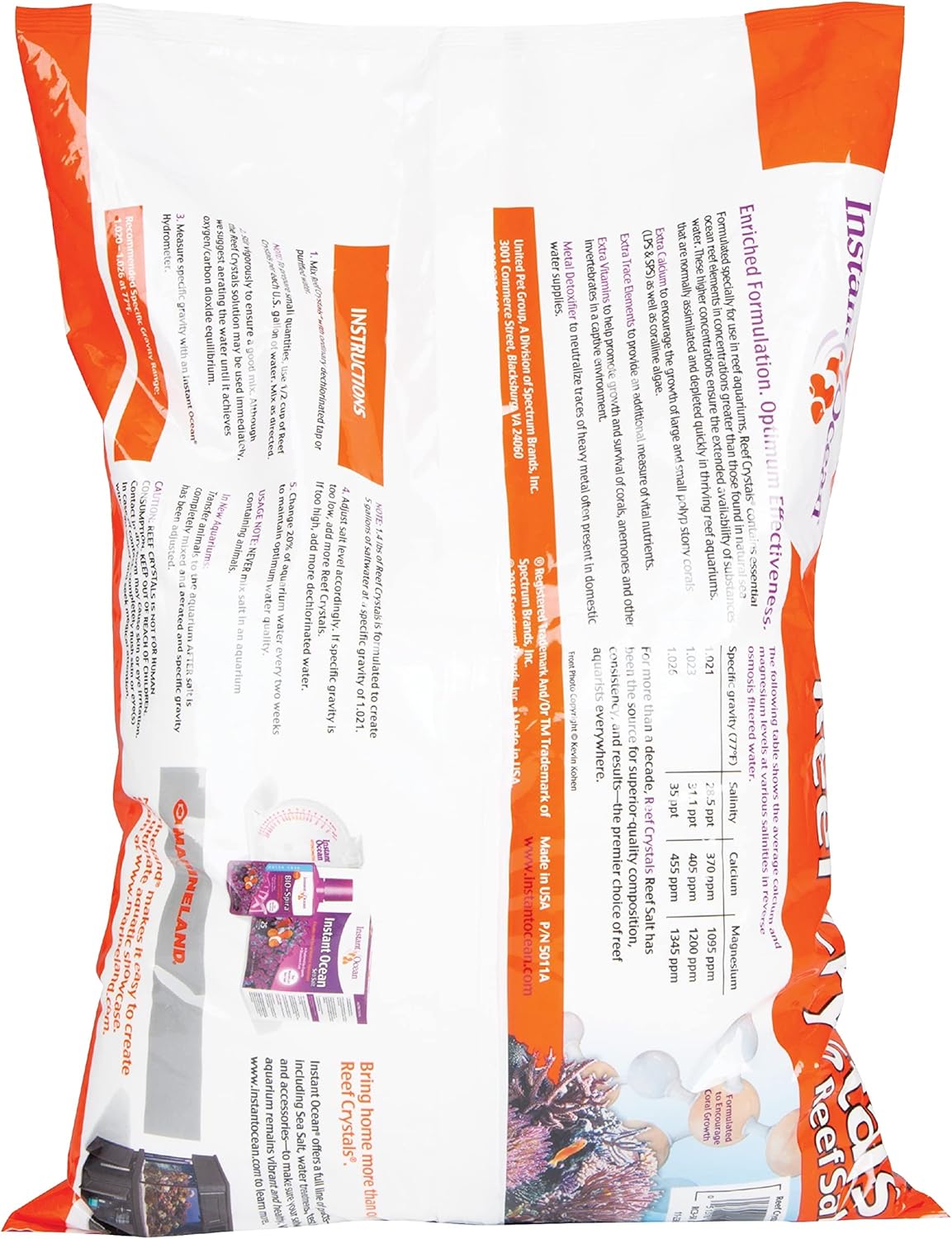
Check price on AmazonReef Crystals is the salt most hobbyists encounter first, and for good reason. It is widely available at local fish stores, priced accessibly for the volume water-changers among us, and its parameters are stable enough that fish, softies (soft corals like zoanthids and mushrooms), and even many LPS (large-polyp stony) corals thrive in it long-term. Practical Fishkeeping’s synthetic seawater and salt mix guides have consistently noted that for mixed reef systems not pushing SPS at the limit, workhorse salts like Reef Crystals are entirely adequate when water-change discipline is consistent.
One owner detail worth knowing: Reef Crystals dissolves slowly in cold water. The workaround is simple — dissolve a few cups in warm water first to create a concentrated slurry, then top off with your prepared fresh water. Owners who skip this step report cloudier mixing and inconsistent early readings. It’s not a defect; it’s a dissolving behavior that a small process tweak solves completely.
Where it fits: Fish-only tanks, FOWLR (fish-only with live rock) systems, mixed reef tanks with soft and LPS corals, and any beginner build where consistency of habits matters more than marginal parameter differences.
Where it starts to show limits: High-demand SPS displays where alkalinity and calcium consumption is heavy and you’re counting on water changes to contribute meaningfully to the parameter baseline. At that level, the lower ceiling matters, and you’ll want to supplement with a two-part or calcium reactor dosing system.
Instant
$25.92
In stock on Amazon
Check price on AmazonRed Sea Reef and Red Sea Coral Pro: Same Brand, Different Intentions
Instant
$79.97
In stock on Amazon
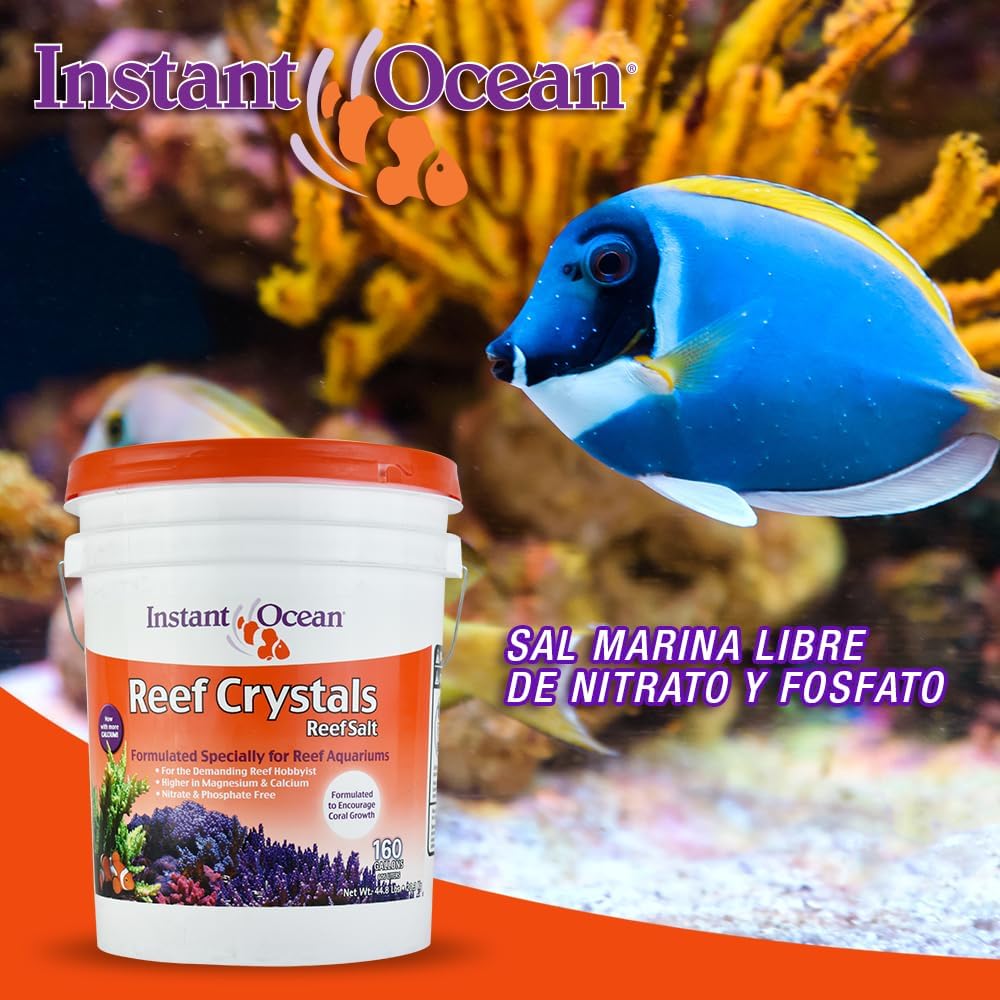
Check price on AmazonRed Sea makes two distinct formulas, and the difference between them is one of the most practically useful distinctions in the salt category.
Red Sea Reef (standard formula) targets a moderate parameter profile — calcium around 430 ppm, alkalinity around 12.0 dKH. It’s designed for mixed reef systems where you want natural seawater parameters as a baseline. Here’s an advanced use case that experienced reef keepers have documented in Reef2Reef forum discussions: one hobbyist deliberately chose Red Sea Reef over Coral Pro specifically because their tank’s KH had crept too high from dosing. Rather than fighting elevated alkalinity with two-part additives or carbon dosing, they used water changes with the lower-parameter salt to bring KH back into range organically. That’s reef chemistry used as a tuning tool — the point is that a “lower” parameter salt isn’t inferior; it’s a lever.
Red Sea Coral Pro is the high-parameter formula: calcium around 450 ppm, magnesium around 1,420 ppm, alkalinity around 12.2 dKH. It’s designed for SPS-dominant systems where coral consumption is high and you want water changes to actively replenish depleted parameters rather than just maintaining neutrality. Reefbuilders’ editorial coverage of Coral Pro has highlighted this design intent — it’s a genuine formulation choice for high-demand builds, not simply a marketing distinction.
The meaningful caution: A long-tenured reefer who has maintained reef tanks since 1988 documented a serious event after a water change on a 220-gallon system using Red Sea Coral Pro — fish began dying and pH dropped sharply. Their own conclusion was that this was parameter shock rather than a product defect. When you change a large volume of water and the new water has substantially different parameter levels — even in the “better” direction of higher calcium and higher alkalinity — the rapid shift itself can stress or kill fish. This is especially true on large-volume changes exceeding 20–25% of system volume performed quickly.
The lesson isn’t “don’t use Coral Pro.” It’s: on large systems, match new saltwater temperature carefully before adding, consider splitting large changes across two days, and never assume that higher-parameter water is automatically safer to add quickly. Coral Magazine’s reef salt chemistry editorial coverage emphasizes slow, temperature-matched water changes as baseline practice regardless of salt brand.
A note on delivery: Multiple buyer accounts of large Red Sea buckets — both the standard Reef formula and Coral Pro — document damaged containers on arrival, with at least one buyer reporting it happened on two consecutive orders. Large salt buckets are heavy and the lids are the vulnerable point. If you’re ordering bulk Red Sea, request that the retailer add fragile labeling, consider adding a protective note to your order, and inspect the seal immediately on arrival before storing.
Instant
$79.97
In stock on Amazon
Check price on AmazonFritz Pro RPM: The Precision Option
Red
$99.99
In stock on Amazon
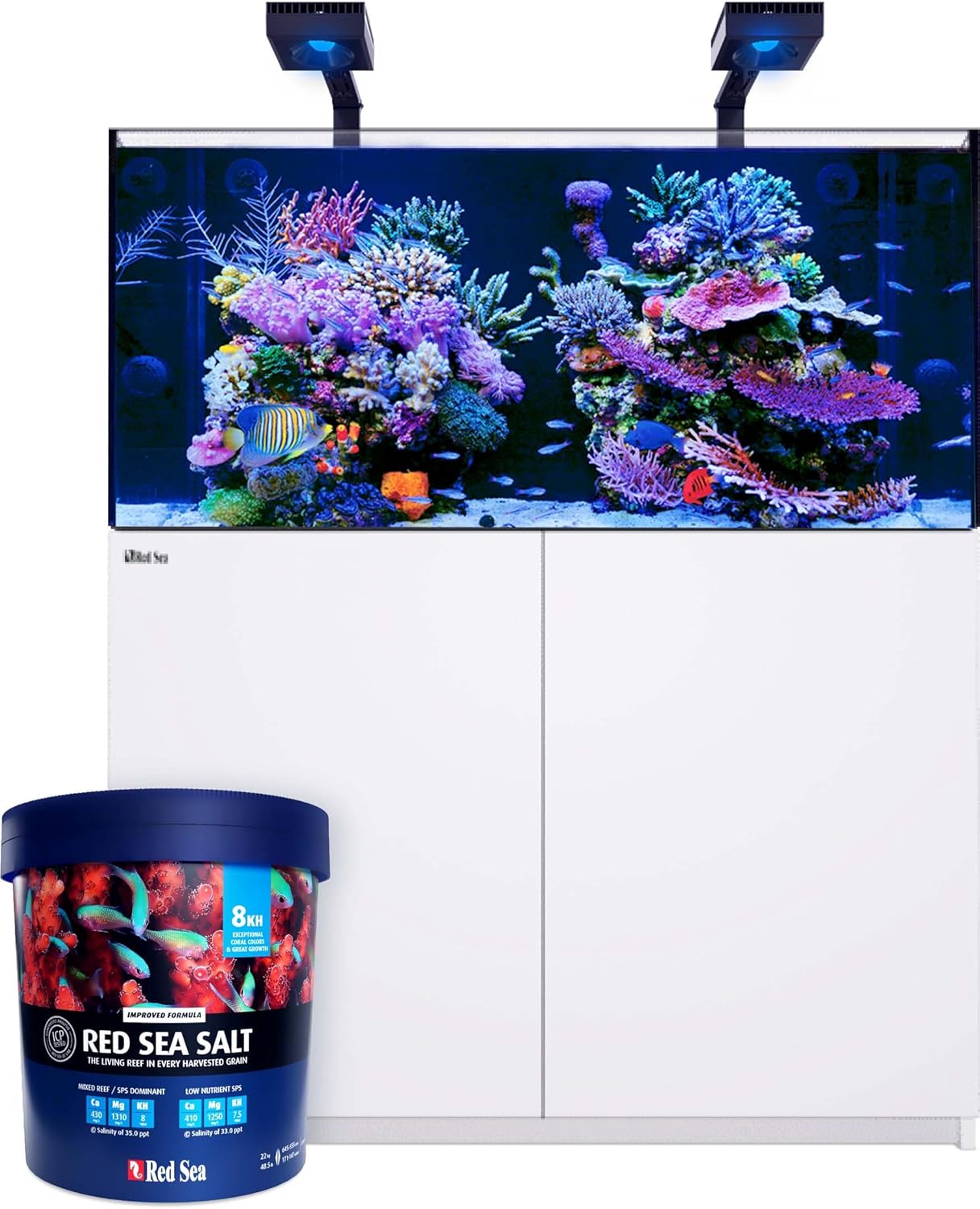
Check price on AmazonFritz Pro earns consistent praise in the reef community for one specific quality: parameter accuracy. Owners who test their salt batches frequently report that Fritz Pro’s calcium, alkalinity, and magnesium numbers land reliably close to the published target values across different bags and mixing sessions. Advanced Aquarist’s salt mix chemistry comparison documentation has cited batch-to-batch consistency as one of Fritz Pro’s distinguishing characteristics — a meaningful advantage for reefers who dose precisely and want their salt baseline to behave predictably.
The aesthetic experience — how the mixed water looks and how quickly it clears — also earns positive marks. Owners report Fritz Pro mixing to a visibly clean solution, which is reassuring if you’re mixing directly into a display or a small sump compartment without a dedicated mixing reservoir.
The one documented vulnerability is shipping: at least one buyer received a bag that arrived broken inside the outer packaging — not a quality failure of the salt itself, but a packaging and transit durability issue. This appears to be a spot occurrence rather than a systemic pattern, but it’s worth knowing if you’re ordering online. For larger formats, inspect on delivery and photograph any damage immediately for a claim.
Where Fritz Pro fits: Reef keepers at any level who value precision and want to reduce the variable of batch inconsistency. It’s particularly well-matched for SPS builds and reefers who test parameters frequently and want their salt to land predictably. Reef2Reef forum discussions frequently position Fritz Pro alongside Red Sea Coral Pro when experienced hobbyists debate which salt best supports an Acropora-dominant display.
Red
$99.99
In stock on Amazon
Check price on AmazonThe Decision Framework: Matching Salt to Your System
Here’s how to map your situation to the right salt:
You’re new to saltwater and running a fish-only, FOWLR, or mixed soft-coral tank: Instant Ocean Reef Crystals is a completely legitimate choice. The parameters are adequate, it’s available everywhere, and the cost allows for generous water changes — which matters more than marginal chemistry differences at this stage. Warm the water before mixing.
You’re running a mixed LPS and SPS reef and want a reliable, consistent salt at a moderate parameter level: Red Sea Reef or Fritz Pro are both strong fits. Fritz Pro edges ahead if batch consistency is your priority; Red Sea Reef if you want the option to use water changes as a KH management tool when alkalinity drifts high.
You’re running a high-demand SPS system or an Acropora-dominant display: Red Sea Coral Pro’s elevated calcium and magnesium are genuinely useful here. The elevated alkalinity baseline helps sustain fast-growing stony corals between dosing cycles. Stay disciplined about water-change volume — keep single changes under 20–25% of total system volume on large tanks — and always temperature-match before adding new saltwater.
Your KH is running high and you want to bring it down without dosing: Switch temporarily to Red Sea Reef standard or Reef Crystals. The lower alkalinity baseline will pull your tank’s KH down gently through successive water changes. Monitor with a reliable test kit — Salifert and Hanna checkers are frequently cited in Reef2Reef discussions as reference-grade options for this kind of parameter tuning.
You want precision above all and test every batch: Fritz Pro is the pick most consistent with that mindset, based on the batch-to-batch consistency documentation in Advanced Aquarist’s comparative salt chemistry coverage.
Frequently Asked Questions
Is Instant Ocean Reef Crystals good enough for SPS corals, or do I need Red Sea Coral Pro? Reef Crystals can sustain SPS corals, but it works best when paired with a reliable two-part or calcium reactor dosing system to compensate for its lower calcium and alkalinity ceiling. For systems where water changes alone are the primary parameter strategy, Coral Pro’s higher baseline is genuinely helpful. The real answer: salt brand matters less than consistency of practice.
What is the actual difference in calcium, alkalinity, and magnesium between Red Sea Reef and Red Sea Coral Pro? Based on published manufacturer spec sheets: Coral Pro runs roughly 20 ppm higher in calcium (450 vs. 430), about 0.2 dKH higher in alkalinity, and approximately 100 ppm higher in magnesium (1,420 vs. 1,320). Those differences are small in a single change but compound meaningfully over months of weekly water changes on a high-demand system.
Can parameter shock from a high-alkalinity salt like Coral Pro harm fish during a large water change? Yes — this is a documented real risk, as illustrated by a long-tenured reefer’s reported experience on a 220-gallon system. The issue isn’t the salt’s alkalinity level per se; it’s the abrupt shift in water chemistry across a large-volume change. Keep single water changes under 20–25% of total system volume, always temperature-match new saltwater before adding, and consider splitting large changes over two sessions.
How do I protect a large salt bucket from arriving damaged? Inspect packaging at delivery before signing. Photograph any exterior damage before opening. Multiple buyer accounts of large Red Sea Reef and Coral Pro buckets report lid damage or cracked seals from transit — this is a known pattern with heavy salt containers. If ordering from an online retailer, check whether fragile labeling or additional packaging protection can be requested at checkout.
Does Fritz Pro mix as cleanly as Red Sea salts? Owners consistently report that Fritz Pro mixes to a very clean, clear solution with reliable parameter accuracy across batches. Red Sea salts also mix clearly when properly prepared. Fritz Pro’s primary edge is batch-to-batch parameter consistency rather than visual clarity alone.
Can I use a lower-parameter salt intentionally to reduce KH without dosing? Yes — this is a legitimate technique used by experienced reef keepers and documented in Reef2Reef community discussions. If your alkalinity is running high, switching temporarily to Red Sea Reef standard or Reef Crystals and maintaining your normal water-change schedule will gradually pull KH down through dilution. Track the change with a reliable test kit and switch back once you’ve reached your target range.