A protein skimmer removes dissolved organic waste from aquarium water before it breaks down into nitrate and phosphate — the two nutrients that fuel algae blooms and stress coral. It works by generating a column of fine bubbles; organic compounds stick to those bubbles and get carried into a collection cup, where they accumulate as a dark, smelly liquid called skimmate. For a small reef tank — anything under roughly 30 gallons — you need a skimmer sized to fit in tight spaces, either hanging on the back of the tank (HOB) or dropping into the rear chamber of an all-in-one (AIO) system. That is a harder design problem than it sounds, and most budget options solve it imperfectly. This article breaks down three of the most commonly purchased nano skimmers under $150, names what each one actually does well, and tells you which situations each one fits.
The three units in focus: the Coralife BioCube Protein Skimmer, the IOAOI Nano Protein Skimmer, and the Tunze 9001 DOC Protein Skimmer. All three target tanks in the 10–30 gallon range. All three have enough of a review trail — on Reef2Reef forums, in ReefBuilders coverage, and across aggregated owner feedback — to support a clear picture of real-world performance.
What You’re Actually Paying For at This Price Tier
Before comparing specific units, it helps to understand what the budget constraints at $150 and below actually mean for nano skimmer design.
Dana Riddle’s analysis of protein skimmer mechanics, published in Advanced Aquarist under the title “The Biology and Chemistry of Protein Skimming,” establishes that skimmer efficiency scales with two variables: contact time between water and air bubbles, and the consistency of bubble size. At the nano price point, manufacturers work with inexpensive needle-wheel or venturi pumps and injection-molded acrylic or ABS bodies. The engineering tradeoffs appear in three places every buyer notices: break-in behavior (how long before the skimmer stabilizes and stops overflowing), collection cup ergonomics (how easy it is to empty without making a mess), and physical fit in the tank or sump chamber it’s meant for.
Practical Fishkeeping’s reference guide “Protein Skimmers Explained” reinforces this point: even well-designed skimmers at this price require an adjustment period as the pump’s impeller and internal surfaces coat with a thin biofilm, gradually changing bubble behavior. What separates useful units from frustrating ones is how long that period lasts and how uncontrolled the initial overflow gets.
The Three Contenders
Coralife BioCube Protein Skimmer
Rated for: Up to 30 gallons. Designed with BioCube AIO owners in mind, though it also functions as an HOB unit on standard tanks.
What reviewers consistently report: The break-in curve on the Coralife BioCube skimmer is the steepest of the three. Owners across Reef2Reef threads report 4–6 hours of foam overflow before the unit settles — and some report repeat overflow events when water level shifts or after the cup is cleaned. The recurring advice in those threads is patience: let it run, resist the urge to adjust the water-level collar every 20 minutes, and give it a full day before evaluating performance.
Physical fit is a genuine problem for BioCube 16 owners specifically. Multiple accounts on Reef2Reef describe the skimmer as very difficult to seat in the 16-gallon rear chamber — the body dimensions are tight enough that proper positioning requires real effort, and some owners report it never sits cleanly. The BioCube 32 is a noticeably better fit. As an HOB unit on a standard rimmed or rimless tank, it performs more predictably.
Build quality: Acceptable for the price. The body feels utilitarian rather than refined, which is consistent with Coral Magazine’s nano equipment roundup coverage noting that this tier of skimmer prioritizes function over finish.
Best fit: BioCube 32 owners who want a purpose-matched skimmer, or HOB use on tanks where rear-chamber real estate is not a constraint.
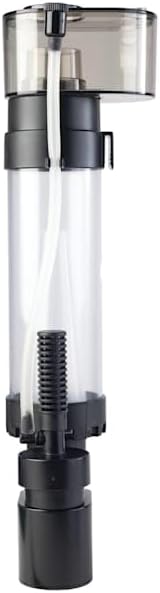
Coralife
$46.95
In stock on Amazon
Check price on AmazonIOAOI Nano Protein Skimmer
Rated for: Tanks roughly 10–30 gallons; manufacturer specifications indicate a minimum operating water depth of approximately 6–7 inches.
What reviewers consistently report: The biggest surprise in aggregated reviews is how premium this unit feels relative to its price. Multiple owners note that the build quality reads well above the budget tier — the acrylic is clear, seams are tight, and the pump runs quietly out of the box. Owners report visible skimmate appearing within 24 hours, which is faster than the Coralife’s break-in in most accounts documented on Reef2Reef.
The standout usability complaint — consistent across Reef2Reef threads — is the collection cup design. To empty the cup, you must detach the entire skimmer body rather than simply lifting off a cap. On a heavily stocked nano reef where cup emptying happens every 2–3 days, that becomes real friction. Reef2Reef discussions document this as the most common reason owners consider switching after purchase.
Physical fit in AIO rear chambers is workable but requires checking footprint dimensions against your specific tank model before buying — it is not a universal fit across all AIO brands.
Best fit: Hobbyists who want above-average build quality at a budget-to-mid price, are running a lightly-to-moderately stocked system, and can tolerate the cup removal process.
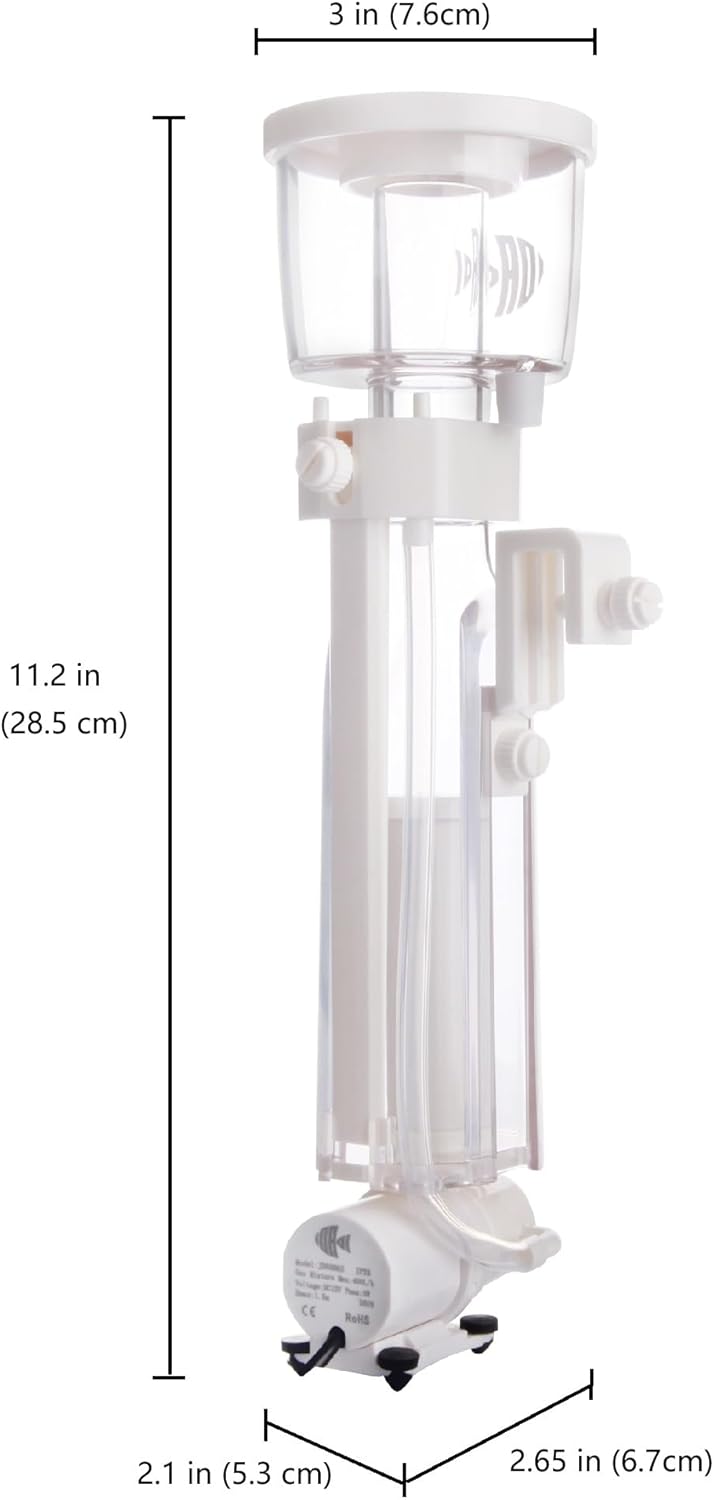
IOAOI
$79.99
In stock on Amazon
Check price on AmazonTunze 9001 DOC Protein Skimmer
Rated for: Up to 250 liters (roughly 65 gallons) per manufacturer specification, meaning it is intentionally oversized for most nano reef applications — and that is part of its appeal.
What reviewers consistently report: The Tunze 9001 earns its price premium through review patterns that are unusually consistent. ReefBuilders’ product coverage of Tunze’s nano skimmer line highlights the brand’s focus on pump reliability and low vibration, and owner accounts support this: silence and long-term stability are the two most repeated positives. A frequently cited observation across multiple Reef2Reef threads is that the Tunze 9001 is described as the only nano skimmer in its price class that reliably moves skimmate into the cup — a direct comparison to cheaper units that generate foam without consistently collecting it.
The typical narrative in Reef2Reef discussions is that the Tunze 9001 buyer tried one or two budget options first, experienced break-in frustration or mediocre performance, and eventually stepped up. In most of those accounts, the Tunze becomes a long-term keeper rather than a unit that gets replaced.
The tradeoff is price — it sits at the top of this comparison’s range — and it requires sufficient water depth. Manufacturer specifications call for approximately 4–6 inches minimum, though real-world accounts on Reef2Reef suggest 5 inches is the practical floor for stable operation.
Best fit: Anyone running a heavily stocked nano reef, a demanding AIO where reliability matters more than price, or a hobbyist who is done cycling through budget units.
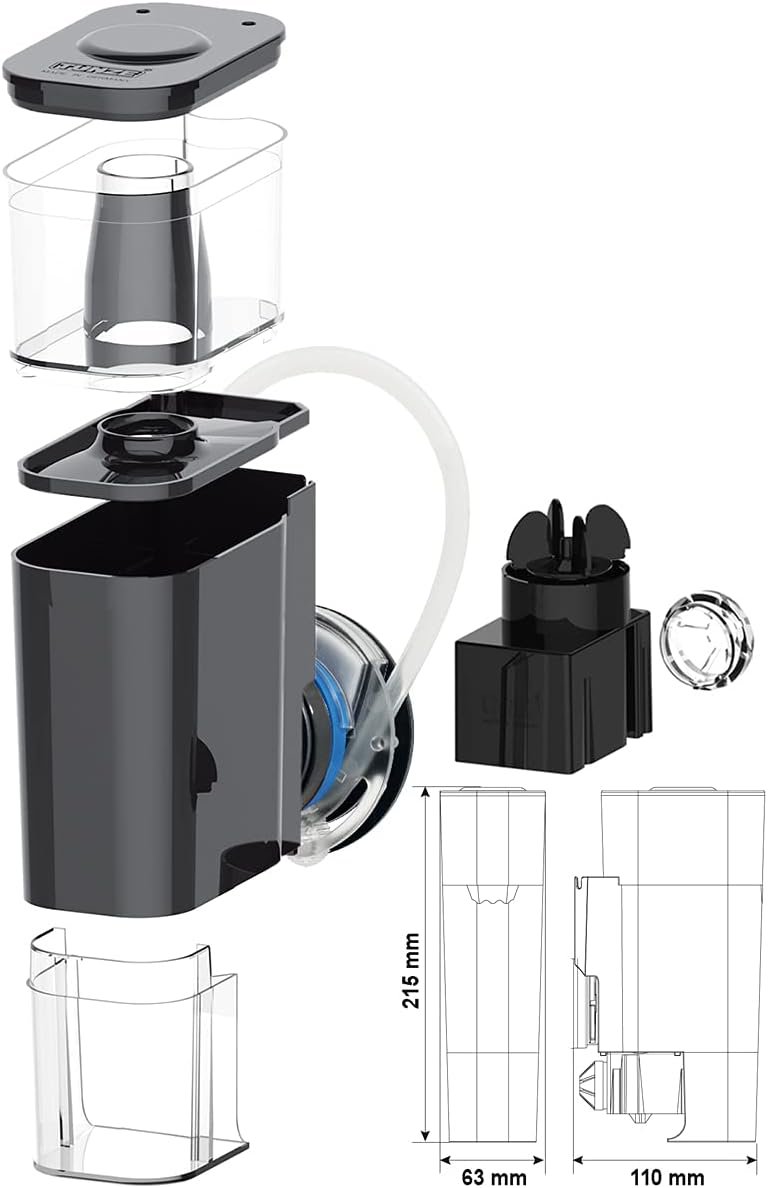
Tunze
$149.99
In stock on Amazon
Check price on AmazonSide-by-Side Comparison
| Feature | Coralife BioCube | IOAOI Nano | Tunze 9001 |
|---|---|---|---|
| Rated tank size | Up to 30 gal | ~10–30 gal | Up to ~65 gal |
| Break-in time (reported) | 4–6+ hours | ~24 hours | ~24–48 hours, stable |
| Min. water depth | ~6 in | ~6–7 in | ~5 in (practical floor) |
| Cup removal | Lift-off cap | Body detach required | Lift-off cap |
| BioCube 16 fit | Difficult | Check dims | Check dims |
| Price tier | Budget | Budget-mid | Mid-premium |
Coralife
$46.95
In stock on Amazon
Check price on AmazonIOAOI
$79.99
In stock on Amazon
Check price on AmazonTunze
$149.99
In stock on Amazon
Check price on AmazonThe Decision Rule
If you are in the middle of setting up a tank or dealing with a skimmer that is not performing, the choice usually comes down to one of three situations.
If your primary concern is price and you’re on a BioCube 32 or a tank with flexible rear-chamber access: the Coralife BioCube is serviceable. Budget an honest 4–6 hours of break-in time, do not adjust the collar constantly, and it will dial in. Do not buy it for a BioCube 16 — the fit reports from Reef2Reef are too consistently negative to recommend it there.
If you want the best build quality at the budget tier and can tolerate the cup removal process: the IOAOI is a genuine surprise. Its faster break-in and premium feel make it a legitimate step up from the Coralife. Confirm your chamber dimensions before ordering, and accept that emptying the cup involves more steps than it should.
If you have already spent money on one of the above and been frustrated, or if you are stocking heavily from the start: buy the Tunze 9001 now and skip the intermediate step. The review pattern on hobbyists who have owned all three is unmistakable — the Tunze is where most people land eventually. The math of buying two skimmers over 18 months versus buying the right one first rarely favors the budget route.
Frequently Asked Questions
How long does the Coralife BioCube skimmer take to break in and stop overflowing? Based on aggregated owner reports on Reef2Reef, expect 4–6 hours of overflow before the unit stabilizes. Some owners report secondary overflow events after cleaning the cup. The consistent advice: set the water-level collar once, leave it alone, and give the skimmer a full day before deciding it is not working.
Does the IOAOI nano skimmer fit in a standard AIO rear chamber? It fits in many AIO rear chambers, but not universally. Owners on Reef2Reef recommend measuring your specific rear compartment against the IOAOI’s footprint before purchasing. It is not as problematic a fit as the Coralife in a BioCube 16, but it is not a guaranteed fit across all AIO brands.
Is the Tunze 9001 worth the price premium over cheaper nano skimmers? For heavily stocked tanks or hobbyists who have already cycled through a budget skimmer without satisfying results, yes — the review evidence on Reef2Reef and in ReefBuilders’ product coverage is consistent that the Tunze’s reliability and skimmate production justify the cost. For lightly stocked systems where any skimmer would perform adequately, the premium is harder to justify.
How often do I need to empty the collection cup on a heavily stocked nano reef? On a heavily stocked 20–30 gallon nano reef, expect to empty the collection cup every 2–4 days. Reef2Reef threads suggest that some high-bioload systems — particularly those with aggressive feeding schedules or multiple fish — may require daily checks. This is why cup ergonomics matter: the IOAOI’s body-detach design becomes notably inconvenient at that frequency.
Can I run a nano reef without a skimmer if I use filter floss and do frequent water changes? As outlined in Practical Fishkeeping’s “Protein Skimmers Explained” reference guide and the chemistry framework in Dana Riddle’s Advanced Aquarist piece “The Biology and Chemistry of Protein Skimming,” it is possible to maintain a lightly stocked nano reef without a skimmer if you combine weekly 15–20% water changes with regular mechanical filtration — specifically, filter floss changed every 2–3 days. Coral and other sensitive invertebrates are the limiting factor: dissolved organics that a skimmer would remove will accumulate faster and stress corals before fish show visible symptoms. Skimmer-free is a viable approach for fish-only or very low-bioload systems; it carries meaningful risk for a reef with SPS or LPS coral.
What water depth does each of these skimmers require to operate correctly? Published specifications and owner-reported minimums from Reef2Reef threads: the Coralife BioCube requires approximately 6 inches of water depth; the IOAOI nano requires approximately 6–7 inches; the Tunze 9001 is rated for a minimum of roughly 4–6 inches per manufacturer documentation, with real-world accounts suggesting 5 inches as the practical floor for stable operation. All three require stable water level to avoid re-triggering the break-in overflow cycle — AIO tanks with consistent auto top-off systems have a meaningful advantage here.