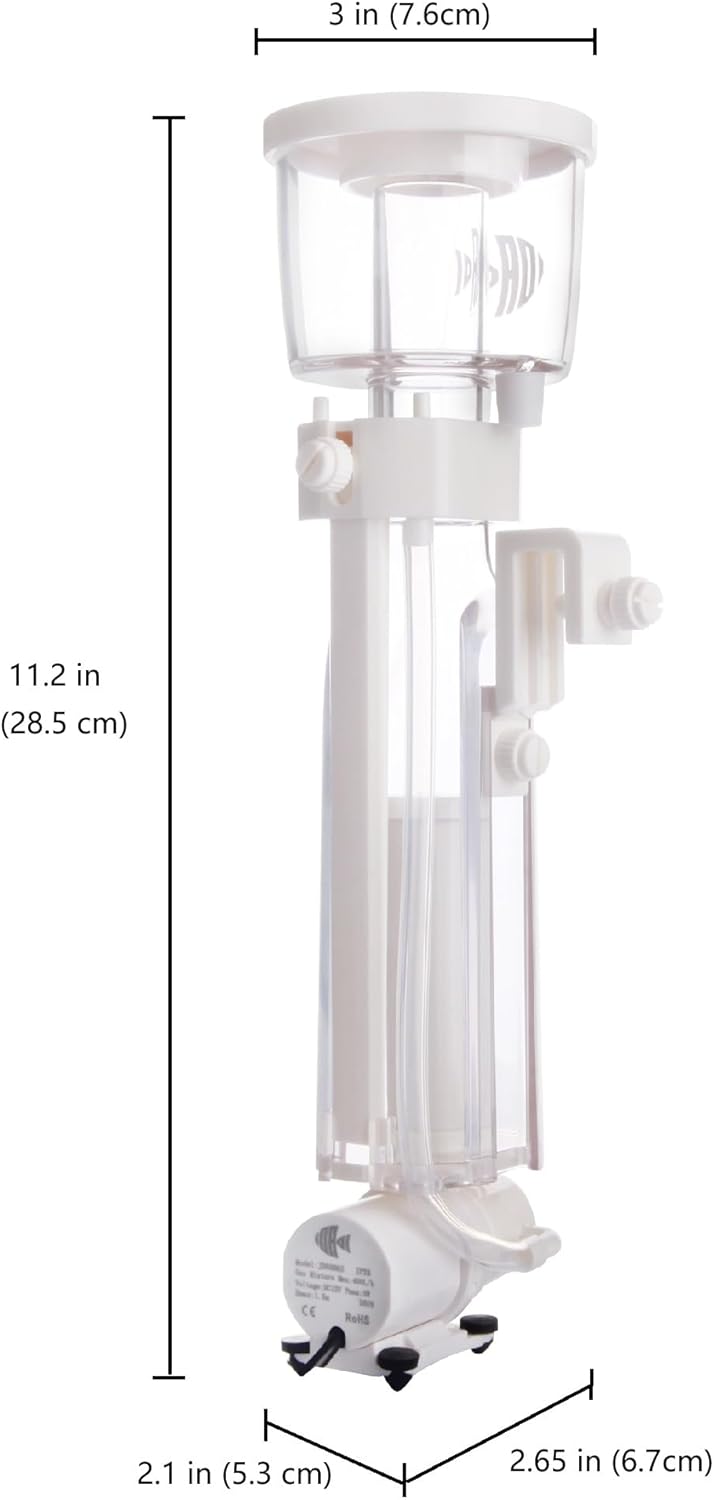
Setting up a small reef aquarium — a “nano reef,” typically any saltwater tank under 40 gallons — sounds deceptively simple. Less water means less to manage, right? In practice, smaller water volume means smaller margins for error. A single missed water change or a dying snail you didn’t notice can swing your water chemistry in hours instead of days. That’s where filtration earns its keep. Filtration in a reef context means three overlapping jobs: removing dissolved organic waste before it breaks down (protein skimming), trapping floating particles before they cloud the water (mechanical filtration via filter floss or sponge), and supporting the beneficial bacteria that convert ammonia into less harmful compounds (biological filtration). Get all three working together and your tank runs cleaner with less daily intervention. Get even one wrong and you’ll be chasing problems — algae outbreaks, elevated nitrate, stressed corals — for months.
This guide is built for the builder who already has a tank picked out and is now staring at a wall of filtration options wondering what’s actually necessary versus what’s nice-to-have marketing. We’ll cover which nano protein skimmers are worth the money, how to use sponge media and filter floss strategically, and when you can skip the skimmer entirely. The math is here. So are the honest tradeoffs.
Does a Nano Reef Actually Need a Protein Skimmer?
This is the most contested question in the nano reef hobby, and the honest answer is: it depends on your bioload and your tolerance for water changes.
A protein skimmer works by injecting fine bubbles into a column of water. Organic compounds — dissolved fish waste, uneaten food, coral mucus — adsorb onto the bubble surfaces and collect in a removable cup as dark, smelly “skimmate.” In larger systems, skimmers are non-negotiable. In a tank under 30 gallons, the math gets murkier.
The case for skipping it: A lightly stocked nano — two small fish, a handful of soft corals, live rock at roughly 1 pound per gallon — can run clean on twice-weekly 10–15% water changes alone. Advanced Aquarist’s coverage of nano reef biological filtration notes that well-cured live rock in a lightly stocked system provides enough biological capacity that a skimmer adds marginal value. ReefBuilders has echoed this in several nano setup guides, pointing out that some skimmers rated for “up to 30 gallons” produce so little skimmate in an undersized or understocked tank that they barely justify the power draw and noise.
The case for running one: The moment you add a second fish, dose broadcast coral foods, or miss a water change, dissolved organic load climbs fast. Practical Fishkeeping’s guidance on small marine systems is direct: in tanks where biological and mechanical filtration can’t keep pace with inputs, a skimmer provides a meaningful buffer. The real-world pattern observed across aggregated Reef2Reef review threads is telling — owners who skipped a skimmer on a lightly stocked 20-gallon eventually added one after an algae outbreak or an unexplained coral decline. The skimmer became a post-problem purchase rather than a planned tool.
Decision rule: If your nano is under 20 gallons, lightly stocked, and you’ll commit to twice-weekly partial water changes — you can run without a skimmer. If you’re over 20 gallons, plan to keep fish (not just corals), or want a more forgiving maintenance schedule, a skimmer is worth the investment. The question then becomes which one.
Nano Skimmer Shootout: What the Pattern of Owner Reviews Actually Shows
The nano skimmer market is full of products that look credible on spec sheets but frustrate owners within weeks. Three products dominate the conversation in current Reef2Reef threads and ReefBuilders coverage, and each occupies a distinct position.
The Tunze 9001: The Premium That Earns Its Price
The Tunze 9001 is the skimmer that owners who burned through two or three cheaper units eventually land on — and the review pattern is remarkably consistent. The phrase “started pulling dark skimmate within hours, no break-in drama, almost no noise” appears across dozens of independent owner accounts. That’s not marketing copy; that’s a product that behaves predictably out of the box.
Reef2Reef threads on nano skimmer comparisons repeatedly show a “tried everything else” buyer arc: owners who spent $40–$60 on entry-level nano skimmers, then another $50–$70 on a mid-tier option, and finally stepped up to the Tunze and described it as “should have just bought this first.” The 9001 is rated for tanks up to approximately 26 gallons and fits standard sump chambers, though it requires a minimum water depth of around 7–8 inches to operate correctly — confirm your sump chamber dimensions before ordering.
Honest limitation: The price point sits noticeably above competing nano skimmers. If your tank is under 15 gallons and lightly stocked, you may be over-speccing.
The Coralife Biocube Skimmer: Functional, But Know the Break-In Reality
The Coralife skimmer is purpose-built for AIO (all-in-one) Biocube tanks and is frequently bundled or recommended with those systems. The most consistent owner report is a 4–6 hour break-in period before the skimmer begins producing meaningful skimmate — and owners who don’t know this sometimes assume the unit is defective. At least one widely cited owner account describes the skimmer suddenly overflowing the collection cup with accumulated waste after that break-in window, a memorable (if messy) first experience.
Post break-in, daily cup emptying is flagged as a legitimate chore in aggregated reviews. For a heavily stocked tank, that production volume is actually a sign of good function — but it adds a maintenance step that some owners underestimate. If you’re committed to the Biocube ecosystem and accept the break-in behavior, this unit works. If you want a quieter setup process, look elsewhere.
The IOAOI Nano DC Pinwheel Skimmer: The Underdog Worth Considering
The IOAOI is a DC (variable-speed) pinwheel skimmer aimed at AIO rear-chamber installs, and owner feedback across review aggregations shows a consistent theme: it fits neatly in tight AIO chambers, starts producing skimmate within 24 hours, and the build quality surprises buyers who expected a flimsy product at its price point. ReefBuilders coverage of the DC pinwheel skimmer category notes that variable-speed DC motors give owners more control over foam head height — useful in the cramped, shallow chambers found in AIO designs like the Fluval Flex.
The primary complaint in reviews is dialing in the precise water level for stable foam production. This is a universal nano skimmer challenge, but owners of the IOAOI report spending more time on initial adjustment than they expected. Once dialed in, it tends to run stably. If your main constraint is rear-chamber clearance and you want a skimmer that won’t blow your budget, this is the option most worth evaluating.
Mechanical Filtration: Filter Floss and Sponge Media
Filter Floss: The Overlooked Workhorse
Filter floss is exactly what it sounds like — a fibrous, pillow-stuffing-like material that traps suspended particles as water passes through it. In a nano reef, it’s typically placed in the first chamber of a sump or AIO rear section, before water reaches the skimmer or return pump. Done right, it handles the mechanical filtration load that would otherwise clog your biological media and foul your skimmer neck.
The Borlech 8-layer filter floss roll has accumulated strong owner reviews for one specific reason: it’s exceptionally effective at particle capture. Owners consistently describe crystal-clear water results. One frequently cited account even reports that a piece used in a deliberate blackwater betta setup stripped all the tannins from the water within a day — the owner had added tannin-releasing botanicals intentionally and the floss removed every trace of the amber color.
Critical warning if you’re running a specialty biotope: High-efficiency filter floss will remove intentional water additives, including tannins, Indian almond leaf extract, or certain coral food supplements, from your water column. If you’re running a blackwater setup, a tannin-stained nano biotope, or dosing liquid coral foods that you want to remain suspended, use filter floss sparingly or skip it in that particular chamber pass.
For standard nano reefs: replace or rinse floss every 3–7 days. A visibly clogged floss pad becomes a nitrate factory as trapped organics begin to decompose. This is the most common mechanical filtration mistake in small systems.
Sponge Media: Mechanical and Biological Overlap
Sponge foam media serves double duty — it traps particles mechanically while its porous surface also colonizes beneficial bacteria over time. The ALEGI sponge foam has picked up consistent praise for a very specific use case: cutting it to fit pump intake slots in AIO tanks, most commonly cited for the Fluval Flex. Owner reviews describe cutting pieces to block the pump intake slits to prevent small shrimp and other invertebrates from being drawn into the impeller. If you’re running cleaner shrimp or ornamental shrimp in a Flex system, this is a practical, low-cost protective measure with documented success in owner accounts.
As biological filtration media, sponge is a solid starting point but not a replacement for live rock in a reef context. Advanced Aquarist’s guidance on nano reef biological capacity is clear: live rock remains the foundational biological filter in a saltwater system. Sponge extends that capacity and adds mechanical benefit; it doesn’t replace cured rock.
By the Numbers: Nano Filtration Quick Reference
| Tank Size | Skimmer Recommended? | Floss Change Interval | Minimum Live Rock |
|---|---|---|---|
| Under 15 gallons | Optional (light stock only) | Every 3–5 days | 10–15 lbs |
| 15–30 gallons | Strongly recommended | Every 5–7 days | 15–25 lbs |
| 30–40 gallons | Yes, oversize if possible | Every 5–7 days | 25–35 lbs |
Frequently Asked Questions
Does a nano reef tank under 30 gallons actually need a protein skimmer, or can I get away without one? You can get away without one if the tank is lightly stocked and you maintain a strict water change schedule. The risk is a reduced buffer when something goes wrong — a missed change or a spike in organic load can escalate quickly in a small volume. TFH Magazine’s nano reef guidance recommends a skimmer as a baseline for any system expected to support fish alongside corals.
How long does a nano skimmer take to break in and start producing real skimmate? Most nano skimmers need 24–72 hours to break in, during which foam production is unstable. The Coralife Biocube skimmer is specifically noted in owner reviews for a 4–6 hour break-in window before it begins skimming actively. The Tunze 9001 is consistently described as producing dark skimmate much faster — sometimes within hours of setup.
Can I fit a protein skimmer in the rear chamber of a Fluval Flex or similar AIO tank without a sump? Yes, with the right skimmer. AIO rear-chamber skimmers need to fit within tight height and footprint constraints and operate at shallow water depths. The IOAOI nano DC pinwheel skimmer is specifically cited by owners for clean fit in AIO rear chambers. Verify your chamber’s internal dimensions and required minimum water depth against the skimmer’s spec sheet before purchasing.
How often do I need to clean or replace filter floss in a nano reef? Every 3–7 days is the standard guidance, with the shorter end applying if your tank is heavily stocked or you feed heavily. Visibly brown, clogged floss should be replaced immediately — it’s producing nitrates faster than it’s removing particles at that point.
Will high-quality filter floss remove tannins or other intentional water additives from my tank? Yes. Owner accounts with Borlech 8-layer floss include at least one documented case of complete tannin removal from a deliberate blackwater setup. If you’re running a biotope with intentional tannin staining or dosing liquid additives that need to remain in suspension, high-efficiency floss can strip those compounds. Either reduce the floss layers or dose after the floss chamber pass.
What is the minimum biological filtration I need in a nano reef that already has live rock? Live rock is your primary biological filter — Advanced Aquarist’s nano reef filtration overview places well-cured live rock at the center of the nitrogen cycle in any saltwater system. Sponge media and ceramic bio-media in your sump or rear chamber extend that capacity. For a tank under 30 gallons with adequate live rock, additional biological media is supplemental rather than essential, though it adds a useful safety margin during the first several months of a new build.