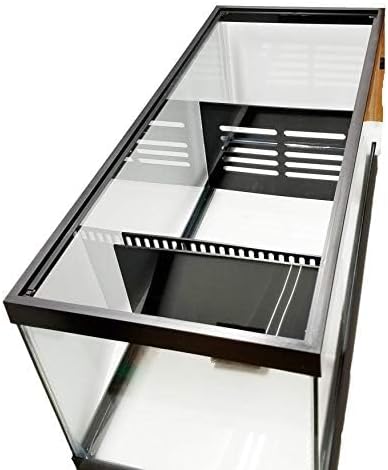
A sump is a separate reservoir — usually a second tank hidden in your aquarium stand — that handles filtration, equipment, and water volume outside the display. Inside that sump, baffles (vertical dividers, typically acrylic panels) create distinct chambers: one for mechanical filtration, one for biological or chemical media, and one for the return pump that pushes water back up to your display. Done well, baffles also prevent microbubbles — the tiny air bubbles generated by equipment — from riding the return flow into your display tank. If you’ve ever watched a reef tank shimmer with a snowstorm of bubbles after a water change, you’ve seen exactly why baffles matter. Building your own baffle system used to mean a hacksaw, a sheet of cast acrylic, and a weekend of frustration. Budget kits have changed that equation — but “budget” doesn’t mean “foolproof,” and this is precisely where owner reviews get instructive.
This article breaks down the two most widely discussed DIY baffle kits — the Bubblefin 20-gallon long baffle kit and the adjustable baffle kit — alongside the Bubblefin filter sock holder. The goal is to help you make a confident decision before you silicone anything that cannot easily be un-siliconed.
What These Kits Actually Do (and Don’t Do)
Before scoring anything, it helps to know what “good” looks like. A functional DIY baffle set needs to accomplish three things: fit your tank precisely enough to prevent water from bypassing the baffle walls, bond permanently to your sump glass with no long-term chemical risk to livestock, and create chamber depths that suit your equipment. That last variable is the one budget kits most often under-serve.
Owners across aggregated reviews on the Reef2Reef community forums and retail platforms consistently describe the same arc: the kit arrives, it looks clean, and then the first real obstacle is figuring out exactly which tank it fits — because the listing assumes knowledge that most first-time sump builders don’t yet have.
Practical Fishkeeping’s guide “Understanding Sump Chambers and Baffles” notes that width tolerance in acrylic baffles is critical — even a quarter-inch gap defeats the bubble-blocking function entirely. Advanced Aquarist’s article “Sump Design Fundamentals for the Modern Reef” establishes the broader principle that return chamber depth must accommodate your return pump with sufficient headroom to prevent air entrainment during power outages — a concept called sump low-water margin. These two design constraints are what most budget kits strain against, and they’re the lens through which every kit below is evaluated.
Kit-by-Kit Breakdown
Bubblefin 20-Gallon Long Baffle Kit
The Bubblefin 20-gallon long baffle kit is one of the most reviewed budget baffle options available, and its review distribution tells a clear story: most five-star reviews mention “perfect fit,” while most three-star or lower reviews mention “doesn’t fit my 20-gallon.” The disconnect is dimensional, and it trips up a surprising number of buyers.
A 20-gallon long tank measures roughly 30” × 12” × 12” (L × W × H). A standard 20-gallon — also called a 20-gallon high — measures roughly 24” × 12” × 16”. Same water volume, completely different footprint. The Bubblefin kit is built for the long format. Owners who attempt to use it in a standard 20-gallon report panels that either won’t span the full width or simply won’t fit at all. As Practical Fishkeeping explains in “Understanding Sump Chambers and Baffles,” even small dimensional mismatches allow water to bypass the baffle entirely, rendering the bubble-trap ineffective. Measure your sump interior before ordering — this is the single most important step for this product.
The instruction absence is real but manageable. Multiple owners flag that the kit ships with no written documentation. However, a consistent pattern holds across reviews: the product photos are detailed enough to infer the assembly sequence. If you are comfortable reading a diagram, you will figure it out. If you need step-by-step text, pull up a Reef2Reef sump build thread before you open the box — the forum’s DIY sump sections contain detailed build logs covering exactly this kit format.
The height limitation is the harder constraint. Published specs and owner reports agree: these baffles are sized for approximately 7 inches of water depth in the return chamber. Advanced Aquarist’s “Sump Design Fundamentals for the Modern Reef” recommends return chamber depth that keeps the pump submerged with meaningful margin during normal operation and power-outage drain-down events. For many mid-sized submersible pumps, 7 inches is workable. For setups with larger return pumps or refugiums intended to hold a meaningful water buffer, it may not be. This is the most commonly cited dealbreaker in long-form owner reviews, and it is worth mapping against your pump specs before ordering.
Best for: Hobbyists whose sump is specifically a 20-gallon long tank, running a mid-sized submersible return pump, who want a no-cut install.
Skip if: Your sump is a standard (high) 20-gallon, any non-standard footprint, or you need return chamber depth beyond 7 inches.
20-Gallon Tank Dimensions at a Glance
| Tank Type | Length | Width | Height | Kit Fits? |
|---|---|---|---|---|
| 20-gallon long | 30” | 12” | 12” | ✅ Yes |
| 20-gallon standard (high) | 24” | 12” | 16” | ❌ No |
| 10-gallon standard | 20” | 10” | 12” | ❌ No |
Bubblefin
$14.98
In stock on Amazon
Check price on AmazonAdjustable Baffle Kit
The adjustable baffle kit earns notably stronger marks on fit. Owners consistently report that the precision of the cut panels is the standout quality attribute, and the design accommodates a wider range of tank interior widths than fixed kits — which addresses the single biggest failure mode of the Bubblefin 20-gallon long kit described above.
But the assembly advice from long-run owners is specific and worth treating as mandatory rather than optional:
Work from the far end toward the inlet. Owners who reversed this sequence — starting from the intake chamber side — report that subsequent panels either don’t align cleanly or leave them trapped at the end of the build with no room to maneuver. The geometry of sump baffling is sequential; each panel’s position is partly constrained by the one before it.
Use slow-setting silicone. This is the piece of advice that appears most frequently in detailed reviews, usually from someone who learned it the hard way. Fast-cure silicone — anything marketed as setting in under two hours — gives you inadequate working time to reposition a panel sitting slightly off square. Community consensus in Reef2Reef’s DIY sump baffle build threads, and guidance in Advanced Aquarist’s “Sump Design Fundamentals for the Modern Reef,” both point toward 100% aquarium-safe silicone with a working time of 20–30 minutes and a full cure of 24–48 hours. One reviewer’s explicit account: the first baffle set before they were satisfied with the position, and restarting that section after partial cure added hours to their build. The lesson is not to rush.
The tradeoff versus the Bubblefin 20-gallon long kit is real: the adjustable design is more forgiving of tank dimension variation, but it demands more patience and deliberate technique during installation. Reef Builders’ article “How to Size a Sump for Your Reef Tank” makes a broader point that applies directly here — rushing any sump build, even the fabrication phase, creates problems that surface later as leaks or bypassed filtration. The adjustable kit rewards methodical builders and punishes impatient ones.
Best for: Hobbyists with non-standard sump dimensions, or anyone who wants flexible chamber sizing without cutting acrylic themselves.
Skip if: You want a truly hands-off install and your tank is a confirmed 20-gallon long — the Bubblefin kit will be faster for that exact application.
Bubblefin
$29.98
In stock on Amazon
Check price on AmazonBubblefin Filter Sock Holder
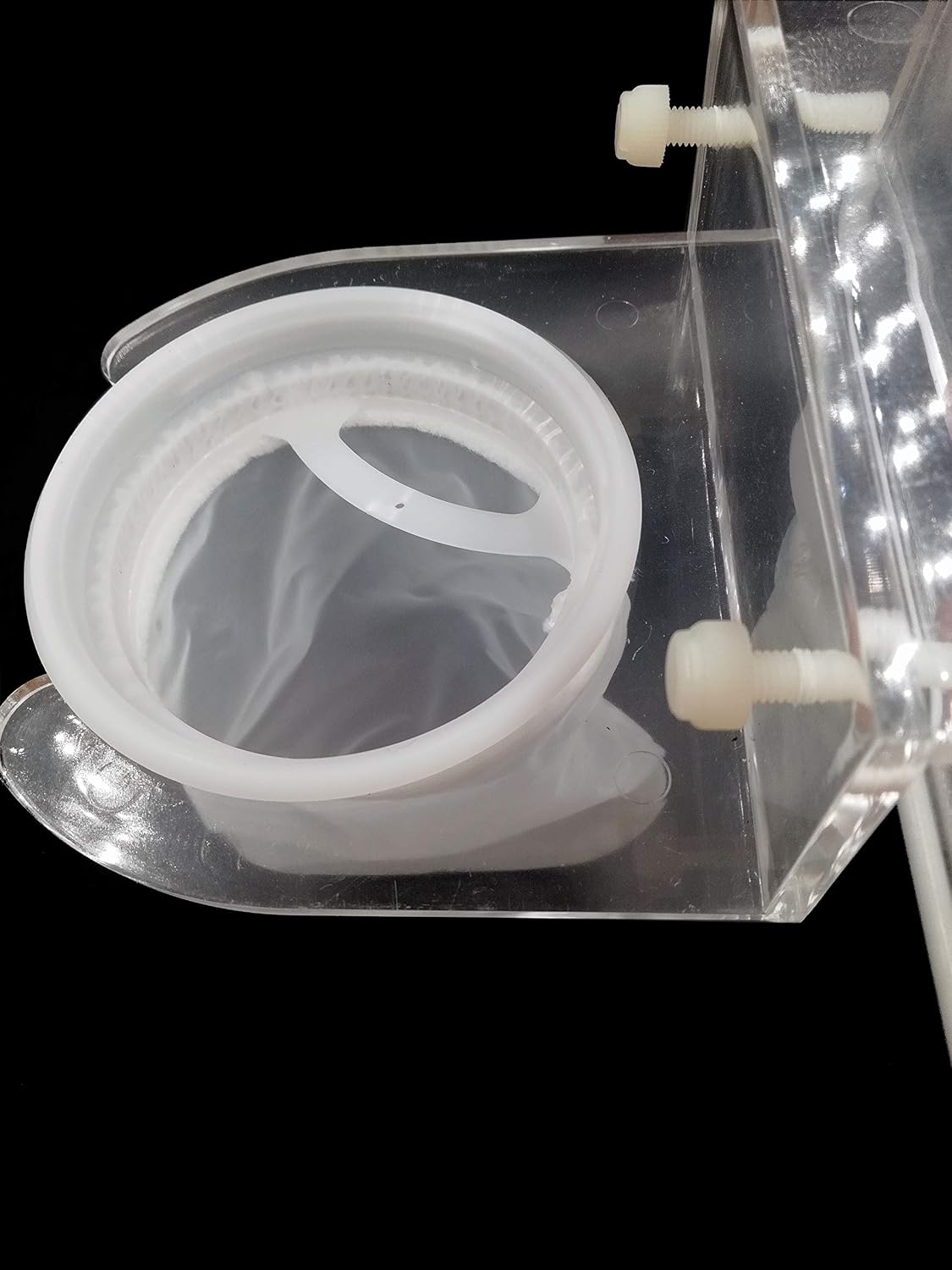
The filter sock holder — a bracket or frame that suspends a mesh sock over the sump’s first chamber to catch particulate before water reaches your biological media — is a different product category, but Bubblefin’s acrylic version draws consistent praise for one thing and consistent criticism for another. Understanding both before purchase saves a return trip.
What owners like: The acrylic construction is noted as clean and professional-looking. More practically, the two-sock configuration is a genuine operational advantage — owners report being able to rotate to the second sock while the first is in the rinse cycle, eliminating the partial-bypass problem common with single-sock setups that must be removed entirely for cleaning. Reef2Reef’s sump maintenance threads frequently cite two-sock rotation as best practice for continuous mechanical filtration, and this holder makes that workflow straightforward.
The included socks are widely considered non-functional. This is not a minority opinion — it is a pattern across virtually every detailed owner review. The specific complaint varies between “too coarse to catch fine particulate” and “they collapse under normal flow.” In either case, owners report upgrading immediately to third-party filter socks rated for 100-micron or 200-micron filtration. The holder itself earns good marks; the socks that ship with it are treated as placeholder material by the community.
The nylon set screws require careful handling. The bracket attaches to your sump rim via nylon set screws, which are softer than metal equivalents — intentionally, to avoid scratching acrylic. Owners consistently note that overtightening cracks the nylon, and replacement screws are not included. Finger-tight plus a careful quarter-turn with a screwdriver is the community-standard approach documented across Reef2Reef’s DIY sump hardware discussions. The screws are a known weak point that becomes a non-issue if you handle them with deliberate restraint from the start.
Best for: Hobbyists who plan to buy quality third-party socks immediately and want a two-sock rotating setup at a budget price point.
Skip if: You expect the included socks to perform — budget for replacements before day one.
Bubblefin
$14.98
In stock on Amazon
Check price on AmazonThe Decision Frame: Which Kit Matches Your Situation?
If your sump is a 20-gallon long tank and you want a simple, no-cut install with a known chamber height: the Bubblefin 20-gallon long kit fits cleanly for that application. Accept that 7 inches of return chamber depth is the ceiling, and plan your return pump selection accordingly.
If your sump is any non-standard dimension — or if you want flexibility in chamber sizing: the adjustable baffle kit is the stronger choice, provided you commit to the slow-silicone, far-to-near assembly sequence. The precision-fit advantage is real; the patience requirement is equally real.
For the filter sock holder: the Bubblefin unit is a sound chassis purchase if you plan to replace the socks immediately. Budget for a set of third-party 100-micron felt or mesh socks as a day-one upgrade, and handle the nylon set screws carefully.
Practical Fishkeeping’s guide “Understanding Sump Chambers and Baffles” recommends dry-fitting all panels with painter’s tape and doing a water-level test before committing to silicone — advice that applies equally to both baffle kits. It is the single most reliable way to catch a dimension or sequencing problem before the silicone goes in and the decision becomes permanent.
Frequently Asked Questions
Will the Bubblefin 20-gallon long baffle kit fit a standard 20-gallon tank, or only the long version?
Only the long version. A 20-gallon long and a standard 20-gallon share the same water volume but have different interior dimensions — 30 inches long versus 24 inches long. The Bubblefin kit’s panels are sized for the 30-inch interior. In a standard 20-gallon, the panels will either be too long to insert or won’t span the width properly. Measure your sump interior length before ordering.
What silicone should I use to bond acrylic baffles to a glass sump, and how long should I wait before adding water?
Use 100% aquarium-safe silicone — the key specification is that it contains no mold inhibitors or fungicides, which are toxic to fish and invertebrates. Community consensus in Reef2Reef’s DIY sump baffle threads most frequently cites clear 100% silicone formulations that carry no additives. Allow a minimum of 24 hours before adding water; 48 hours is the safer standard, particularly in high-humidity environments where cure time extends. Advanced Aquarist’s “Sump Design Fundamentals for the Modern Reef” reinforces that cure shortcuts are among the most common causes of baffle failure in DIY builds.
How deep does the water need to be for the baffle kit to work properly?
The Bubblefin 20-gallon long kit is designed for approximately 7 inches of water depth in the return chamber. Below that, the baffle geometry may not function as intended. If your return pump requires a deeper water column, or if you want to run a higher water level for thermal buffering, this kit’s fixed baffle height becomes a binding constraint. The adjustable kit offers more flexibility on this dimension.
Can I adjust the chamber sizes after I silicone the baffles in, or is it permanent?
Siliconed baffles are effectively permanent in practice. Acrylic-to-glass silicone bonds are strong, and removing a cured baffle without damaging the glass or the acrylic requires careful scoring — not a beginner-friendly process. Plan your chamber layout before the first panel goes in. As Practical Fishkeeping’s guide “Understanding Sump Chambers and Baffles” advises, dry-fitting all panels with painter’s tape before any silicone is applied is the standard practice for catching layout problems early.
What filter socks should I upgrade to if the included Bubblefin socks underperform?
Owners most frequently cite 100-micron felt socks as the reliable standard upgrade. Four-inch or seven-inch diameter felt socks rated at 100 microns fit the Bubblefin holder and are available from several aquarium supply brands. For tanks with higher bioload or finer particulate — common in reef systems with fine sand beds or heavy feeding schedules — some owners run 200-micron socks during the first pass and 100-micron as a second stage. Focus on micron rating and felt (not mesh) construction for mechanical filtration in reef sumps; those two specs matter more than brand name.