If you’ve ever looked inside a sump — the hidden filtration tank that sits below your main aquarium — you’ve probably seen a tray or chamber filled with some kind of material: smooth plastic spheres, rough ceramic chunks, or a white fluffy pad. These are all forms of biological and mechanical filtration media, meaning they either provide a home for the beneficial bacteria that break down fish waste (biological), or they physically trap particles floating in the water (mechanical). Getting this right matters more than most beginners expect: the wrong media in the wrong position can cause dangerous ammonia spikes, clog your flow, or turn your sump into a nitrate factory. This guide walks you through the three most common options — ceramic blocks, bio balls, and filter floss — compares them honestly across the decisions that actually matter, and ends with a clear framework for which one (or combination) belongs in your build.
What You’re Actually Trying to Accomplish
Before comparing products, it helps to lock in the underlying goal. Your aquarium produces ammonia constantly — from fish waste, uneaten food, and decaying organic matter. Left unchecked, ammonia is lethal to fish and corals. The nitrogen cycle is the biological process that converts ammonia → nitrite → nitrate, driven by colonies of beneficial bacteria (primarily Nitrosomonas and Nitrobacter species, plus nitrifying archaea). Your bio-media is literally real estate for those bacteria. More surface area = more bacteria = more processing capacity.
Mechanical media like filter floss works differently: it physically intercepts suspended particles before they break down into dissolved compounds, reducing the nutrient load your biological stage has to handle in the first place. The two functions are complementary, not interchangeable — and confusing them is the most common sump-design mistake.
By the numbers:
| Media Type | Approx. Surface Area | Primary Function | Nitrate Tendency |
|---|---|---|---|
| Sintered ceramic blocks (e.g., Seachem Matrix) | 700–800 m²/L | Biological (aerobic + some anaerobic) | Lower (if flow is managed) |
| Bio balls (standard 1.5”) | 150–200 m²/L | Biological (aerobic only) | Higher (aerobic only, no denitrification) |
| Filter floss (polyester, 1” pad) | N/A — mechanical | Mechanical particle capture | Neutral if changed frequently |
Surface area figures per manufacturer specifications and published comparisons cited in Advanced Aquarist’s biological filtration overview.
Ceramic Blocks, Bio Balls, and Filter Floss: A Head-to-Head Breakdown
Ceramic Blocks: High Surface Area, Real Tradeoffs
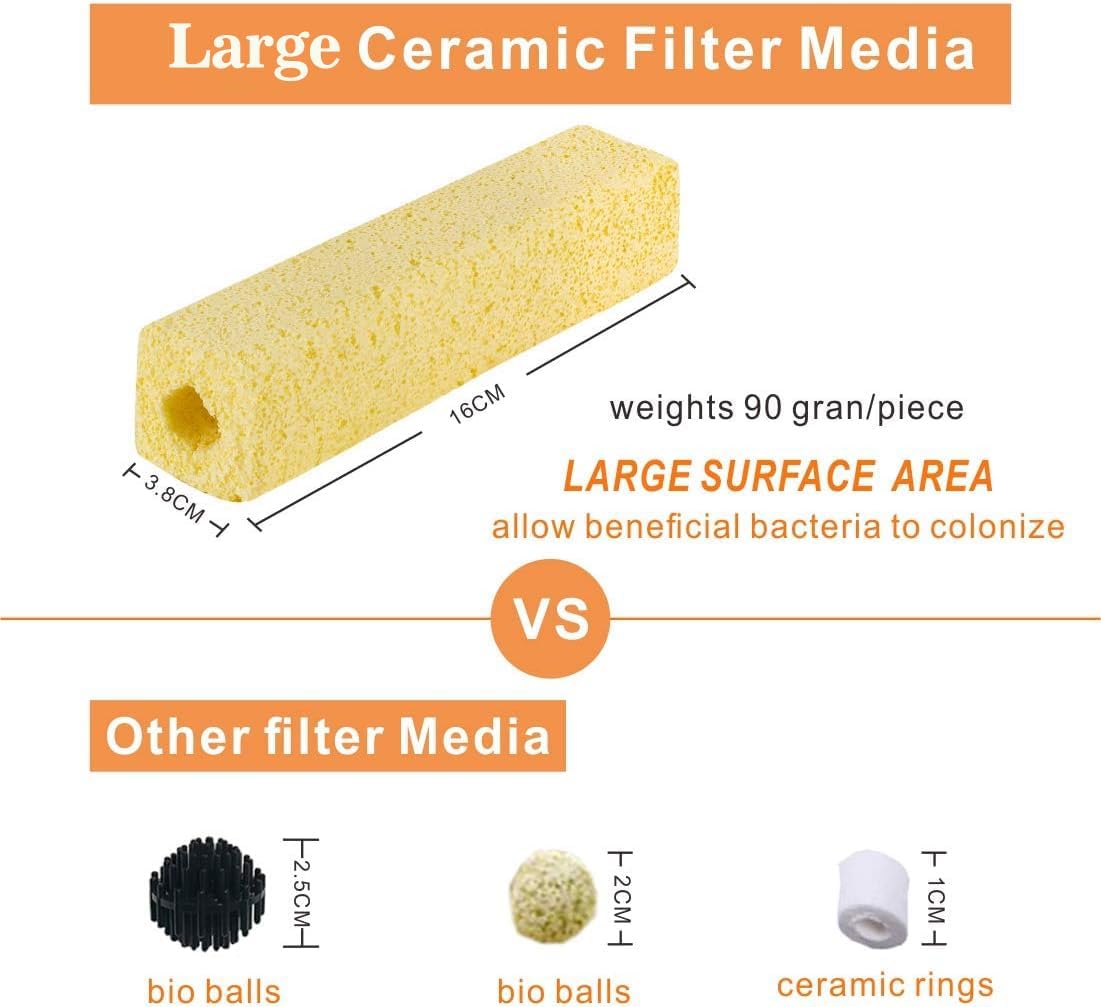
Sintered ceramic media — sold under names like Seachem Matrix, Brightwell Aquatics Xport-BIO, and ADA Bio Rio — is the high-performance option in the bio-media category. The sintered manufacturing process creates a porous internal structure with an enormous surface area relative to volume. Crucially, the deeper pores of high-quality ceramic media can support anaerobic bacteria (bacteria that function without oxygen), which are capable of converting nitrate into nitrogen gas — the final step in the nitrogen cycle that bio balls simply cannot achieve.
For reef tanks specifically, this matters considerably. Coral Magazine’s sump design coverage (“Sump Design Fundamentals for the Home Reef Builder”) consistently points to nitrate management as a primary failure mode in SPS (small-polyp stony coral) systems, where nitrate above 5–10 ppm starts stressing sensitive acropora colonies. If your ceramic media is performing some denitrification in addition to nitrification, you’re addressing the problem upstream rather than relying entirely on water changes or a refugium.
Practitioners on Reef2Reef’s media comparison threads note that loose ceramic chips or spheres in a media reactor or slow-flow chamber outperform ceramic blocks stuffed into a high-flow sump section, where channeling — water finding the path of least resistance and bypassing most of the media — reduces effective surface area dramatically. The consensus in that community reference thread titled “Bio Media Comparison: Surface Area vs. Flow Channeling” is that placement architecture matters as much as media choice.
The honest downside: Quality sintered ceramic is not cheap. Seachem Matrix runs approximately $12–$18 per liter at current 2026 retail; Brightwell Xport-BIO is priced higher. For a sump requiring 3–5 liters of media, you’re looking at $40–$90 just for this chamber. And if your flow distribution is poor — a very common sump design issue — you’re paying a premium for media that underperforms.
Best for: Reef systems with SPS or LPS corals, moderately stocked FOWLR builds, and high-bioload freshwater tanks where nitrate creep is a documented concern. Practical Fishkeeping’s coverage of freshwater sump design (“Understanding Biological Media in Freshwater Sumps”) specifically recommends sintered ceramic for cichlid and oscar setups where bioload is high and nitrate accumulates quickly.
hygger
$39.99
In stock on Amazon
Check price on AmazonBio Balls: Simple, Reliable, and Genuinely Outdated for Most Reef Builds
Bio balls had their moment. Through the 1990s and into the 2000s, wet/dry filtration systems — which trickle water over plastic bio balls suspended in an air-exposed chamber — were the gold standard for biological filtration in marine tanks. The trickle method maximizes oxygen exposure, which supports robust aerobic bacterial colonization. Bio balls work. They colonize quickly, they’re nearly impossible to kill through careless maintenance, and they’re inexpensive.
The problem is that aerobic-only filtration is a one-way street to nitrate accumulation. The nitrogen cycle stops at nitrate — no denitrification occurs in a bio ball chamber. For fish-only marine systems with aggressive water change schedules, this was manageable. For modern reef tanks, especially SPS systems, it’s a structural liability. TFH Magazine’s media comparison coverage (“Filter Media Choices for the Modern Reef Aquarium”) documents this shift explicitly: the industry’s move away from bio balls in reef applications tracks directly with the widespread adoption of live rock, refugiums with macroalgae, and higher-surface-area ceramic alternatives that support anaerobic zones.
If you run bio balls in a marine sump without careful placement and regular maintenance, the spaces between balls trap detritus, creating a slow-release nutrient source. Practitioners on the Reef2Reef media comparison thread refer to this as the “bio ball nitrate trap” problem — it’s well-documented and almost universally cited as the reason experienced reefers removed bio balls from their builds.
Where bio balls still earn their place: Aggressive freshwater systems — large cichlid tanks, goldfish ponds plumbed to indoor sumps — where nitrate tolerance is higher and maintenance simplicity matters. Operators who want zero-fuss biological media that can survive being rinsed, dried, and reinstalled without crashing the cycle. Commercial setups where redundancy and straightforward maintenance protocols matter more than optimization.
Best for: High-bioload freshwater systems, entry-level builds where simplicity is the priority, and operators willing to maintain a strict detritus-removal schedule. Not recommended for marine reef systems.
ALEGI 20PPI
$8.99
In stock on Amazon
Check price on AmazonFilter Floss: The Underrated Workhorse (That Most People Use Wrong)
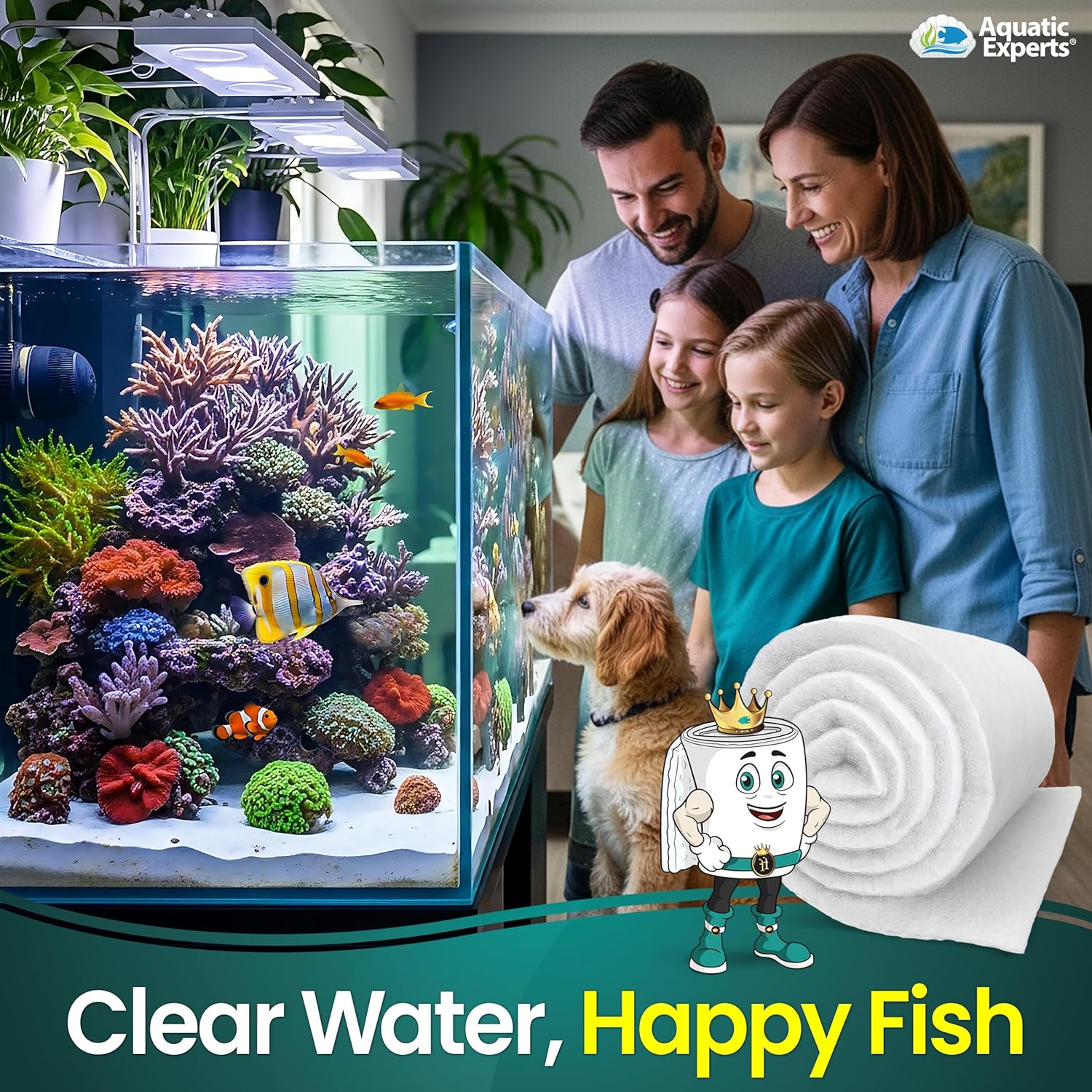
Filter floss — typically a dense white polyester batting material sold in rolls or pre-cut pads — is the simplest and cheapest media in any sump, and it’s also the most misunderstood. It is not a biological media. It does not support bacterial colonization in any meaningful way, and you should not want it to. Its job is mechanical: physically intercept suspended particulates — fish waste particles, uneaten food fragments, detritus — before they dissolve into the water column and become a dissolved nutrient load.
When filter floss is doing its job correctly and changed regularly (every 3–7 days in most reef systems, per Coral Magazine’s sump design guidance in “Sump Design Fundamentals for the Home Reef Builder”), it removes organic waste from the system entirely — not just relocating it. This is a meaningful nutrient export mechanism, similar in principle to skimming. A clean floss pad placed before your biological media chamber extends the life and efficiency of your ceramic or bio balls by preventing them from clogging with particulates.
The critical error: Using filter floss as a set-and-forget media. Left in place for two to four weeks, a saturated floss pad stops filtering and starts releasing accumulated nutrients back into the water as the trapped organics break down. Advanced Aquarist’s biological filtration overview (“Biological Filtration in Marine Systems — A Practical Overview”) flags this as a common source of unexplained nitrate spikes in otherwise well-maintained reef systems.
The best sump designs place filter floss in the first chamber — first to receive raw tank return water — before any biological media. Many practitioners use a modular floss sock or pre-cut pads sized for common sumps to make the 3–7 day swap fast enough that it actually happens. At roughly $10–$20 for a bulk roll that lasts months, filter floss has among the best cost-to-impact ratios of any sump component.
Best for: Every sump, reef or freshwater, as the first-chamber mechanical stage. The question is never whether to use it; it’s how frequently you’re committed to changing it.
Aquatic
$22.49
In stock on Amazon
Check price on AmazonHow to Stack Them: A Practical Sump Chamber Order
The most effective sump design treats these three media types as a sequence, not a competition:
Chamber 1 — Filter floss. Raw water enters; gross particulates are captured mechanically. Change every 3–7 days. This is your detritus interception point.
Chamber 2 — Ceramic bio media. Clarified water flows slowly through sintered ceramic. Aerobic nitrification happens throughout; anaerobic denitrification occurs in deeper pores if flow is managed correctly. In a reef sump, this chamber can also house your refugium or chaeto section downstream.
Chamber 3 — Return pump. Clean, biologically processed water returns to the display.
Bio balls, if you’re using them in a freshwater wet/dry system, occupy the equivalent of Chamber 2, with the trickle format replacing the slow-submerged-flow approach. They don’t belong in a marine Chamber 2 alongside ceramic media — the combination adds complexity without meaningful benefit.
The Decision Framework
Running a reef tank with SPS or LPS corals? Sintered ceramic media (Seachem Matrix, Brightwell Aquatics Xport-BIO) in a slow-flow chamber or media reactor, with filter floss first. Skip bio balls entirely.
Running a FOWLR or lightly stocked reef? The same stack — ceramic plus floss — works well. Bio balls are optional but not recommended unless you already have them and maintain a disciplined detritus-removal schedule.
Running a high-bioload freshwater system (cichlids, goldfish, large community)? Bio balls in a wet/dry configuration are a legitimate, low-maintenance choice. Layer filter floss ahead of them. If nitrate creep becomes a problem over time, swap the bio balls for ceramic media and tighten your water change cadence.
Every build, no exceptions? Filter floss, first chamber, changed on schedule. It is the highest-return move in sump maintenance and the one most consistently skipped by hobbyists at every experience level.
The media itself is less important than the architecture you put it in and the discipline you bring to maintaining it. Get the chamber order right, keep the floss fresh, and your biological stage will take care of itself.