If you’ve ever stared at a coral tank at a local fish store and wondered how something that small can glow that intensely — the answer is almost always the light fixture above it. In reef aquariums, light isn’t just decoration: it powers photosynthesis inside the coral tissue itself, feeding the microscopic algae (called zooxanthellae) that keep your corals alive and colored. Get the light wrong and you’re fighting a losing battle; get it right and even a 15-gallon nano reef can look like a slice of the Great Barrier Reef. This article compares three app-controllable compact fixtures — the Fluval Sea Marine Nano, the FZONE Solo, and the AquaIllumination (AI) Prime 16 HD — across the things that actually matter when you’re making a buying decision: mount compatibility, growth potential, app usability, and honest value for what you’re spending.
| EDITOR'S PICKAquaIllumination Hydra 32 LED A… | Mid-tierWills Aquarium Light | Budget pickFZONE Solo Series Nano LED Aqua… | |
|---|---|---|---|
| Smart control | ✓ Wireless | — | ✓ App |
| Channels | — | ✓ Dual | — |
| Spectral range | Full spectrum | Full spectrum | — |
| Mounting | — | ✓ Hanging | — |
| Light output | High PAR | 100W | — |
| Tank type | Saltwater | Saltwater | Nano reef |
| Price | $479.99 | $89.99 | $85.99 |
| See on Amazon → | See on Amazon → | See on Amazon → |
What “App Control” Actually Means for a Reef Light — and Why It Matters
App control means you program sunrise and sunset ramps, storm simulations, lunar cycles, and spectrum tuning directly from your phone instead of fumbling with button combinations on the fixture. That sounds like a convenience feature, but reefers discussing their systems in Reef2Reef nano reef build threads consistently frame it as something closer to a necessity: coral bleaching events and algae blooms are frequently traced back to sudden intensity changes that a properly ramped schedule would have prevented.
Owners who have switched away from lights without app control specifically cite scheduling complexity as the breaking point. When you’re dialing in a new coral or recovering from a bleaching event, being able to drop intensity to 30% from your couch at 11pm — without reprogramming hardware buttons — is genuinely useful. All three lights in this comparison do that. What separates them is how well they do it, how much PAR (photosynthetically active radiation — the light wavelengths corals actually use) they deliver, and how forgiving they are to install and live with.
Advanced Aquarist’s published coverage of LED spectrum and PAR considerations for SPS systems provides useful grounding here: not all “blue” light is equivalent, and the specific wavelength channels a fixture offers determine whether demanding corals can thrive, not just survive. That principle shapes every recommendation below.
The Three Fixtures: Structured Comparison
Fluval Sea Marine Nano: Better Than Its Reviews, With One Real Gotcha
The Fluval Sea Marine Nano targets the sub-$100 compact fixture market and consistently over-delivers relative to its price point, based on aggregated owner accounts collected across Reef2Reef nano build threads from 2024 through 2025. Owners growing SPS corals — small-polyp stony corals, the most demanding and light-hungry category — have described results as better than initial reviews suggested after approaching their purchase with skepticism. That skepticism-to-satisfaction arc appears often enough in the owner record to represent a genuine signal, not an outlier.
The mount problem is real — but it’s solvable. A recurring theme in negative reviews is tank compatibility. Buyers with rimmed aquariums — tanks with a plastic frame running around the top edge — report that the included arm mount sits awkwardly or won’t seat properly. In documented cases on Reef2Reef, buyers initiated returns before discovering they had simply installed the arm incorrectly. The actual limitation is narrower than reviewers make it sound: very wide or unusually shaped rim profiles may require minor modification, specifically notching the rim lip to allow the arm to clear, but standard rimmed tanks typically work once the arm is correctly seated.
If you’re buying this for a rimless ADA-style tank or a Fluval Flex-series tank, compatibility is essentially a non-issue. If you have a rimmed starter tank, verify the rim width against the mount arm’s clearance spec before assuming you need to return it.
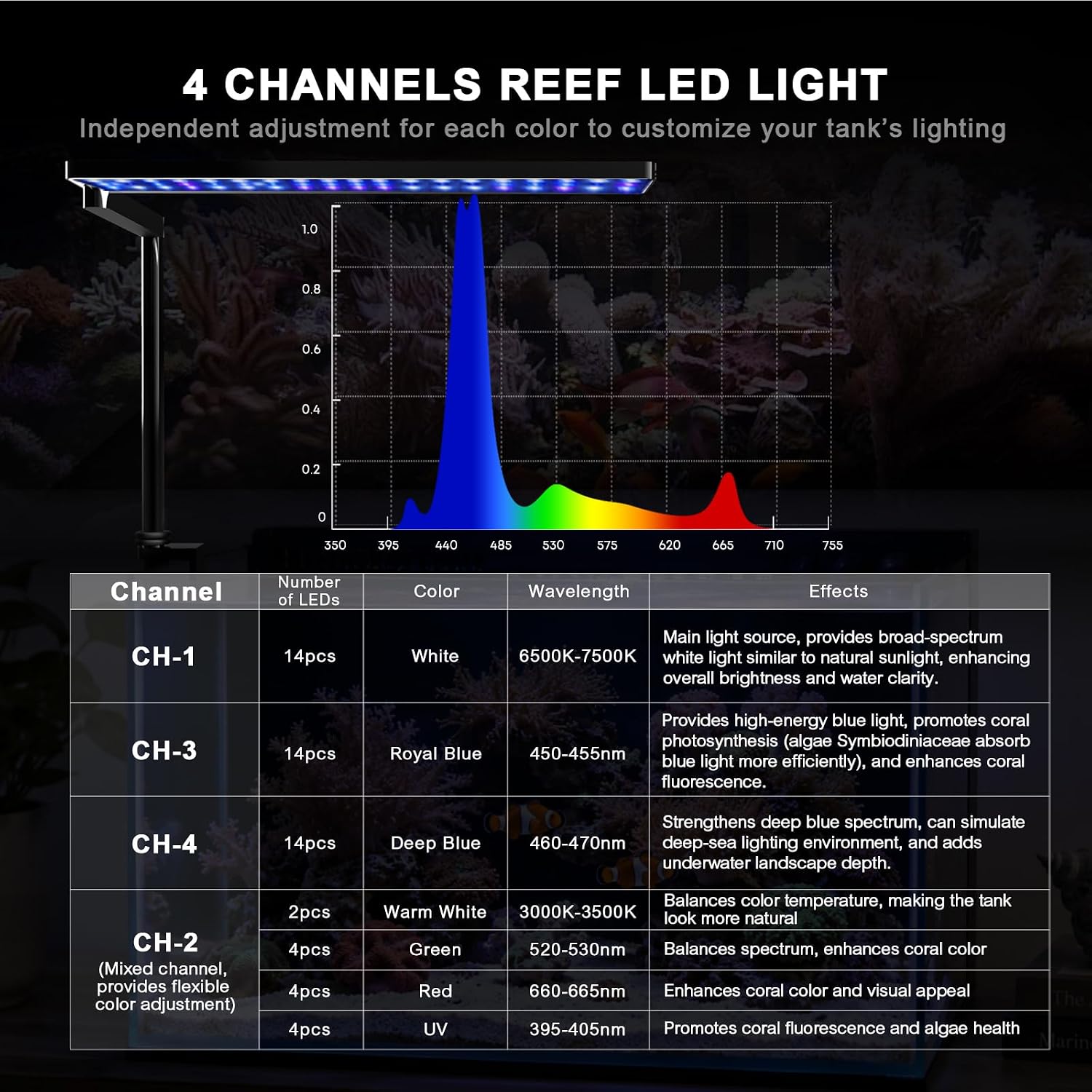
App and spectrum: Fluval’s app is functional for scheduling and intensity adjustment. As noted in Practical Fishkeeping’s beginner reef lighting coverage, entry-tier fixtures in this class tend to offer simplified app control that serves new reefers well but limits advanced customization. The Fluval app follows that pattern: it lacks the granular channel-by-channel spectrum control that higher-end apps offer. For softies, LPS, and beginner SPS, the spectrum is well-calibrated out of the box. Advanced reef builders who want to fine-tune individual blue, UV, or white channels independently may find it limiting compared to the AI Prime ecosystem.
FZONE
$85.99
In stock on Amazon
Check price on AmazonFZONE Solo: The Underdog With Surprisingly Premium Build Quality
The FZONE Solo is the least-known fixture in this comparison and, based on owner accounts, the most surprising. Reef and planted-tank hobbyists who own premium fixtures for direct comparison — not just budget buyers working from a single reference point — describe the build quality in notably specific terms. Phrases like “comparable to higher-range lighting brands” appear across independent reviews from owners who have something concrete to compare it against. That kind of praise from owners with a direct reference point is worth taking seriously.
Who it’s for: The FZONE Solo occupies an interesting middle position. Its spectrum and intensity output are reported as capable of supporting LPS and some easier SPS placements under appropriate programming, which puts it above the entry-level softie-only category. Its physical construction — metal housing, quality optics — reads as better than its price suggests.
The freshwater crossover use case is real. Unlike the Fluval Sea Marine Nano, which is marine-specific in its spectrum tuning, the FZONE Solo’s adjustable channels make it usable over planted freshwater tanks as well. Coral Magazine’s nano reef system design coverage highlights spectrum flexibility as a meaningful differentiator in the budget-to-mid tier, and the FZONE Solo delivers that flexibility in a way marine-only fixtures don’t. Owners running side-by-side planted and reef systems report using it successfully across both applications — which matters if your tank situation changes or if you’re maintaining multiple tanks with different livestock.
App behavior: The FZONE app is serviceable and allows scheduling and intensity control. It doesn’t match the AI Prime’s app depth, but for the price tier it occupies, owners report that it does what it promises without major connectivity frustrations — which, based on Reef2Reef nano build threads, is not a guarantee in this budget segment.
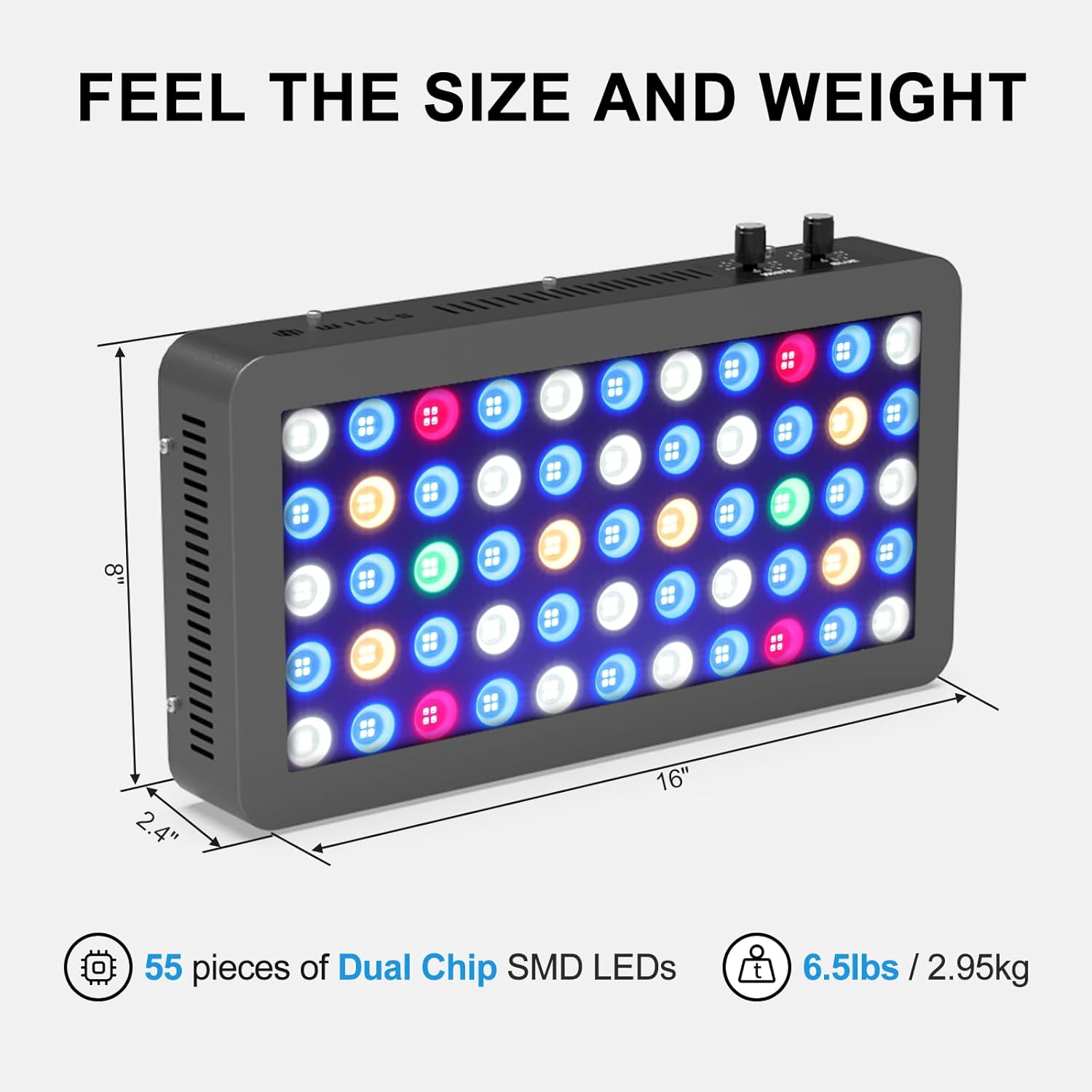
Wills
$89.99
In stock on Amazon
Check price on AmazonAI Prime 16 HD: The Benchmark Everything Else Is Measured Against
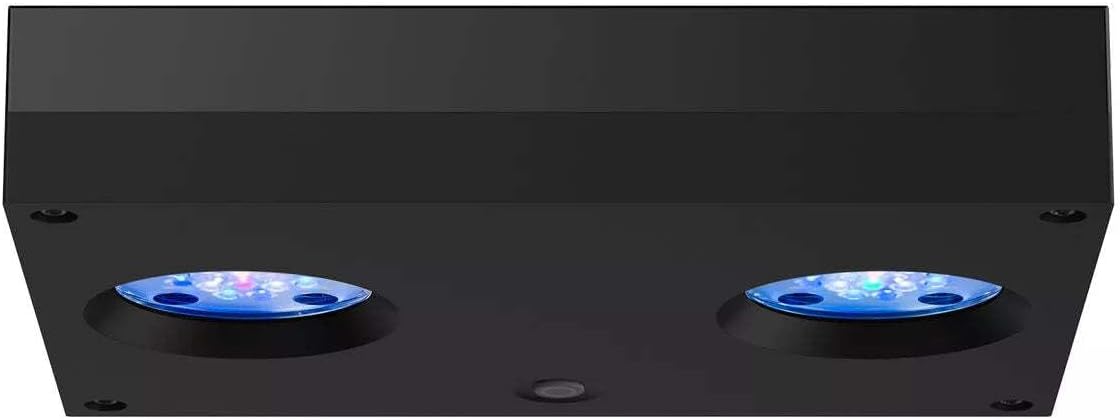
The AquaIllumination Prime 16 HD is the aspirational fixture in nano reef lighting — the one that budget and mid-range alternatives are implicitly compared against, and for good reason. ReefBuilders’ published coverage of the AI Prime product line describes it as a genuinely capable reef fixture rather than merely a premium-branded one. Owners in long-form Reef2Reef build threads report a year or more of reliable operation, consistent SPS and LPS growth, and app programmability that genuinely works at the level advanced reefers require.
The app is the real differentiator. The myAI app — AquaIllumination’s proprietary control platform — allows independent adjustment of multiple LED channels (blue, violet, UV, cool white, warm white) with programmable ramp curves, cloud and storm effects, and integration with the wider AI ecosystem if you add fixtures later. Owners who have used both the Fluval app and the myAI app specifically describe the AI platform as meaningfully more capable for complex scheduling tasks. If you want to replicate natural reef photoperiods or carefully ramp a new SPS coral’s light exposure over several weeks, the myAI app provides the controls to do it precisely.
PAR output and tank fit: Advanced Aquarist’s LED PAR and spectrum coverage for SPS systems notes that fixture output must be evaluated at depth, not just at the surface — and the AI Prime 16 HD is rated for tanks roughly in the 12–30 gallon range as a primary fixture, with PAR values at depth sufficient to support demanding SPS placement in the upper water column. It is not the right choice if your tank is under 10 gallons and houses only softies; you’d be buying capability you’ll never use.
A note on the AI Hydra 32: Several owners comparing the Prime to larger AI fixtures describe the Hydra 32 with genuine awe — one Reef2Reef owner explicitly warned that it “can sunburn you while working near the tank.” For tanks under 30 gallons, the Hydra 32 is almost certainly overkill. The Prime 16 HD hits the right output ceiling for nano applications without requiring you to run it at near-minimum intensity just to avoid bleaching your corals.
AquaIllumination
$479.99
In stock on Amazon
Check price on AmazonSide-by-Side Summary
| Feature | Fluval Sea Marine Nano | FZONE Solo | AI Prime 16 HD |
|---|---|---|---|
| Price tier | Budget (under $100) | Budget–mid ($80–$130) | Premium ($200–$250) |
| Coral capability | Softies, LPS, entry SPS | LPS, moderate SPS | Full SPS capable |
| App depth | Basic scheduling | Scheduling + channels | Full multi-channel programming |
| Freshwater use | Marine-optimized only | Yes, dual-use | Marine-optimized |
| Mount compatibility | Rimless ideal; rimmed workable | Flexible | Universal arm system |
| Best tank size | 10–20 gal | 10–24 gal | 12–30 gal |
On cost over time: Owners who track coral growth rates in SPS-dominant build threads on Reef2Reef consistently report that the AI Prime 16 HD justifies its premium over a 12–18 month horizon when you factor in reduced livestock loss from inadequate spectrum or insufficient PAR at depth. The budget fixtures are genuinely good — but they have a ceiling, and experienced reefers who have hit it describe the upgrade as overdue in retrospect.
The Decision Rule: If X, Then Y
If you have a rimless nano under 20 gallons, a softie-to-LPS stocking plan, and a tight budget: The Fluval Sea Marine Nano is the call. Ignore the skeptical one-star reviews — verify your mount installation, and give it a real 60-day run before judging spectrum performance.
If you want build quality above your price tier and flexibility across freshwater and reef applications: The FZONE Solo earns serious consideration. It is the most underrated fixture in this comparison by a meaningful margin, based on what owners with reference-point experience are reporting.
If you’re growing SPS, want an app that gives you genuine programming control, or are building toward a more complex reef system over time: Buy the AI Prime 16 HD. The price difference is real, but owners in long-run Reef2Reef build threads are consistent: the app works, the growth results follow, and you won’t outgrow the fixture on a tank under 30 gallons.
If someone suggests the AI Hydra 32 for your 20-gallon: Politely decline. It’s a phenomenal fixture — for tanks where it makes sense.
Frequently Asked Questions
Does the Fluval Sea Marine Nano fit on a rimmed aquarium or only rimless tanks? It works on most rimmed tanks, but the arm mount can be fiddly. Very wide or unusually shaped rim profiles may require minor modification. Multiple buyers initiated returns before realizing they’d installed the arm incorrectly — so before returning, confirm the arm is fully seated and consult Fluval’s installation documentation.
Can the FZONE Solo nano light grow SPS corals or is it limited to softies and LPS? Owner accounts suggest it’s capable with easier SPS placements — particularly at shallower depths in smaller tanks — but it’s not the fixture you’d choose for a demanding Acropora-dominant system. For softies and LPS it performs well above its price tier.
How does the AI Prime 16 HD app compare to the Fluval app for scheduling complexity? Meaningfully different. The myAI app offers multi-channel independent control, detailed ramp programming, and storm and cloud effects that the Fluval app doesn’t match. Owners who’ve used both describe the AI platform as the clear choice for complex scheduling tasks. If all you need is basic on/off timing, either app works; if you want precise spectrum management, the Prime wins by a significant margin.
Is the AI Hydra 32 too powerful for a tank under 30 gallons? Almost certainly yes, for most owners. Owners in Reef2Reef build threads describe its output intensity as exceptional — one warned it could literally sunburn you while working near the tank. At 20 gallons, you’d likely run it at very low percentages to avoid bleaching corals, which wastes the fixture’s capability and your money.
What is the minimum tank size where the AI Prime 16 HD makes financial sense over budget alternatives? Around 15–20 gallons is the practical threshold, assuming you’re keeping LPS or SPS corals and planning to hold the tank for at least 12–18 months. Below that size with only softies, the Fluval or FZONE delivers enough performance that the Prime’s premium doesn’t pay back within a reasonable ownership window.
Can the FZONE Solo nano be used on a freshwater planted tank as well as a reef? Yes — this is one of its genuine advantages over the Fluval Sea Marine Nano. Owners running both planted and reef systems report it performs well across both applications, with spectrum adjustment flexible enough to support plant growth as well as coral. For hobbyists maintaining multiple tank types, that flexibility has real practical value.